 By ando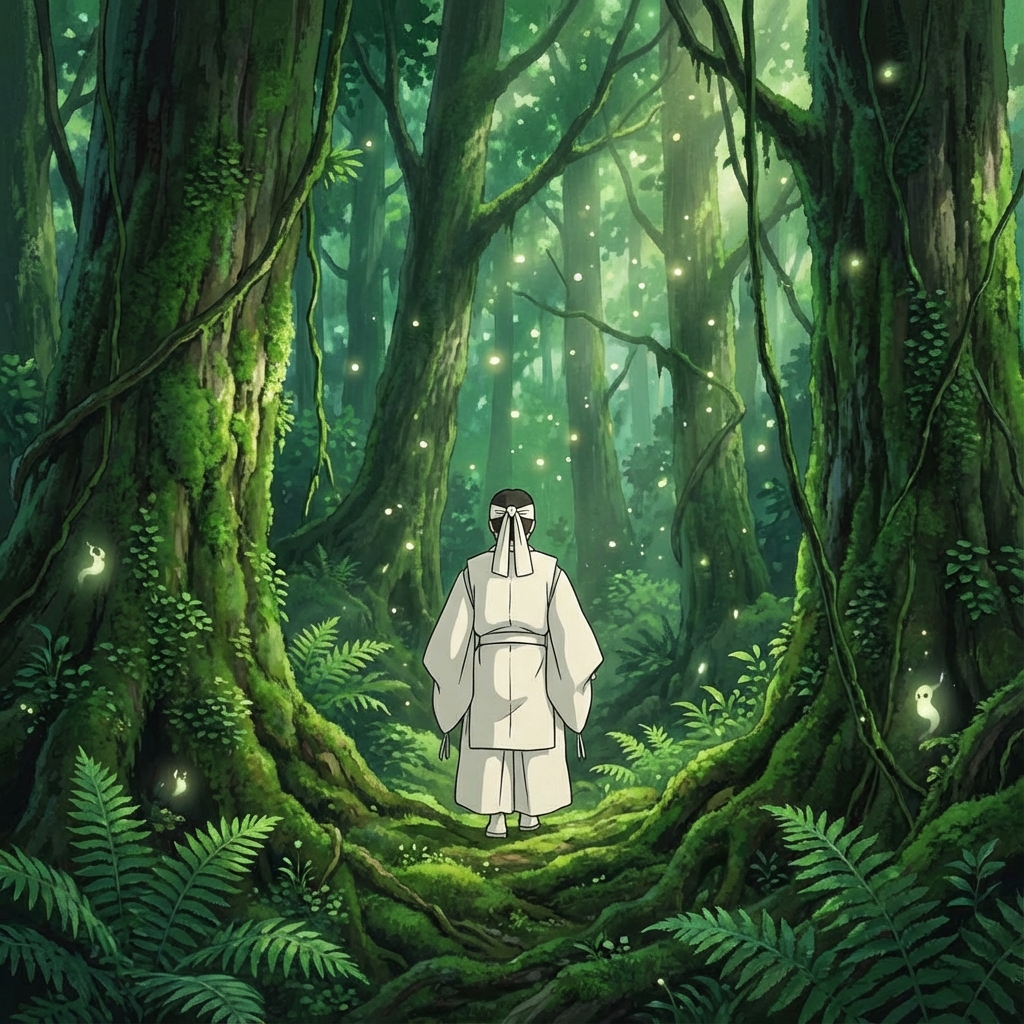
Keta Taisha (け たたいしゃ), located in Hakui City, Ishikawa Prefecture, is the Ichinomiya (chief shrine) of Noto Province, boasting a history of over 2100 years. As its name suggests, it is known as a place where much “ki” (vital energy) gathers and has been revered since ancient times as one of the Hokuriku region’s leading power spots. This article will delve deeper into the mysterious legends passed down at this ancient jinja, as well as its modern-day aspect as an anime pilgrimage site.
Basic Information
Main kami enshrined: Onamuchi-no-mikoto (also known as Okuninushi-no-mikoto)
Location: 1-1 Ku, Jike-machi, Hakui City, Ishikawa Prefecture
History: According to shrine tradition, its origin dates back to when Onamuchi-no-mikoto led over 300 kami from Izumo into Noto, settled the land, and then became enshrined here. It is a historically significant grand shrine, with records showing that the Man’yo poet Otomo no Yakamochi also visited and composed a poem.
The Mystery of Irazu-no-Mori: The Forest No One Enters for 3500 Years
Behind the honden (main hall) of Keta Taisha stretches “Irazu-no-Mori” (The Forest No One Enters), a vast primeval forest spanning approximately 3.3 hectares. This area is designated as a National Natural Monument, but its most significant feature is that it is a “completely forbidden area (kinsokuchi).”
Strict Taboo: Even the chief priest (guji) is permitted to enter only once a year (during the Okumiya Reisai, or regular festival of the inner shrine, on December 30th). Furthermore, an extremely strict ritual is observed, where they enter blindfolded.
Emperor Showa’s Imperial Poem: In 1983, when Emperor Showa specially entered this forest, he composed the poem: “In this shrine forest untouched by axe, I marvel at the rare wild oranges growing.” At that time, only a few specialists were permitted to accompany the Emperor.
Legend of the Uminari Kozō: There is a legend of the “Uminari Kozō” (Sea Roaring Monk Child), which tells of strange sounds coming from within the forest. From ancient times, people have revered and protected this forest as an object of awe.
A Cormorant Becomes a Kami? The Unusual Umatsuri Festival
The “Umatsuri” (Cormorant Festival), held in the early hours of December 16th each year, is a very rare Shinto ritual designated as a National Important Intangible Folk Cultural Property.
Usama Dochu (Cormorant Deity’s Journey): A wild cormorant caught in Unoura-machi, Nanao City, is treated as a kami (deity) called “Usama” (Lord Cormorant) from that moment. Three “Utoribe” (cormorant catchers/attendants) place it in a cage and carry it on foot over a distance of approximately 40 km, taking three days.
Movements to Foretell Fortune: The cormorant, released in the darkened worship hall (haiden), has its movements observed until it perches on the an (sacred table) before the kami. These movements are used to predict the next year’s harvest (good or bad fortune). For instance, if the cormorant is slow to perch on the an, it is considered an ill omen, making it a highly tense Shinto ritual.
A Kami with 181 Children? The Strongest Matchmaking Power
The main enshrined kami, Onamuchi-no-mikoto, is believed in mythology to have united with many goddesses and fathered as many as 181 children. Due to this, he gathers immense faith as a kami of matchmaking (enmusubi).
Tsui tachi Musubi (First Day Connection): During the “Tsui tachi Musubi” (First Day Connection) held on the 1st of every month, after the monthly festival (Tsukinami-sai), visitors can receive free prayers for matchmaking, attracting many worshippers from across the country.
Heart Ema and “Musubi Shin’en”: Within the shrine grounds, there is the “Musubi Shin’en” (Connection Garden), where visitors stack small stones with their wishes. It is cherished as a testament to the many “connections” (go-en, referring to relationships or good fortunes) that have been formed.
Anime Pilgrimage: ‘Insomniacs After School’
In the popular manga and anime “Insomniacs After School,” which is set in Hakui City, Keta Taisha appears as one of the important sacred sites (seichi).
Scenes in the Work: It is depicted in scenes where the protagonists, Ganta Nakami and Isaki Magari, visit during a festival, among others. The worship hall (haiden) and torii gate, reproduced with intricate artwork, are so accurately depicted that fans can recognize them at a glance. In episodes around Anime Episode 8 and 9, you can see its majestic appearance alongside the beautiful scenery of Noto.
The 2024 Noto Peninsula Earthquake and the Path to Recovery
Due to the Noto Peninsula Earthquake that occurred in January 2024, Keta Taisha also suffered damage, including its Important Cultural Property shrine buildings tilting. Fortunately, it avoided large-scale collapse, and prayers for recovery are now being offered daily.
The name “Keta” signifies “much ki” (abundant vital energy). Even amidst challenging circumstances, the powerful energy filling this land remains unchanged, continuing to give healing and courage to its visitors. When you visit Noto, please stand before this mysterious forest and feel its “ki.”
Related Links / References
[1] Keta Taisha’s Five Wonders | Irazu-no-Mori, Miraculous Stones, and Umatsuri
[2] YouTube
[3] Keta Taisha’s “Irazu-no-Mori,” a forbidden area protected by the Kaga Domain, rings an alarm | Waraku web, learn more about the beautiful country of Japan!
[4] The Beautiful Forbidden Lands of Japan Vol. 6: Feel the breath of nature continuing from ancient times – Ishikawa Prefecture’s Keta Taisha “Irazu-no-Mori” | TABIZINE ~ Journey to life ~
[5] Umatsuri – Keta Taisha
[6] Keta Taisha Recovery Prayers – Keta Taisha
[7] Noto Kuni Ichinomiya Keta Taisha | Spots | Ishikawa Prefecture Official Tourism/Travel Site “Hot Ishikawa Tabinet”
[8] Keta Taisha – Kunitama no Kai
[9] History-dev – Keta Taisha
[10] Keta Taisha – Jun-en_See for good luck! Read for good fortune! Temple & Shrine Information and E-commerce Site
[11] Noto Kuni Ichinomiya Keta Taisha | Kanazawa Film Commission
[12] (PDF link)
[13] Umatsuri
[14] Keta Taisha and the Noto Peninsula Earthquake [History of Shrines Supporting Recovery] | (Official) Otakara Aid for Item Donations | Your Support Power to Over 100 NPOs