 By ando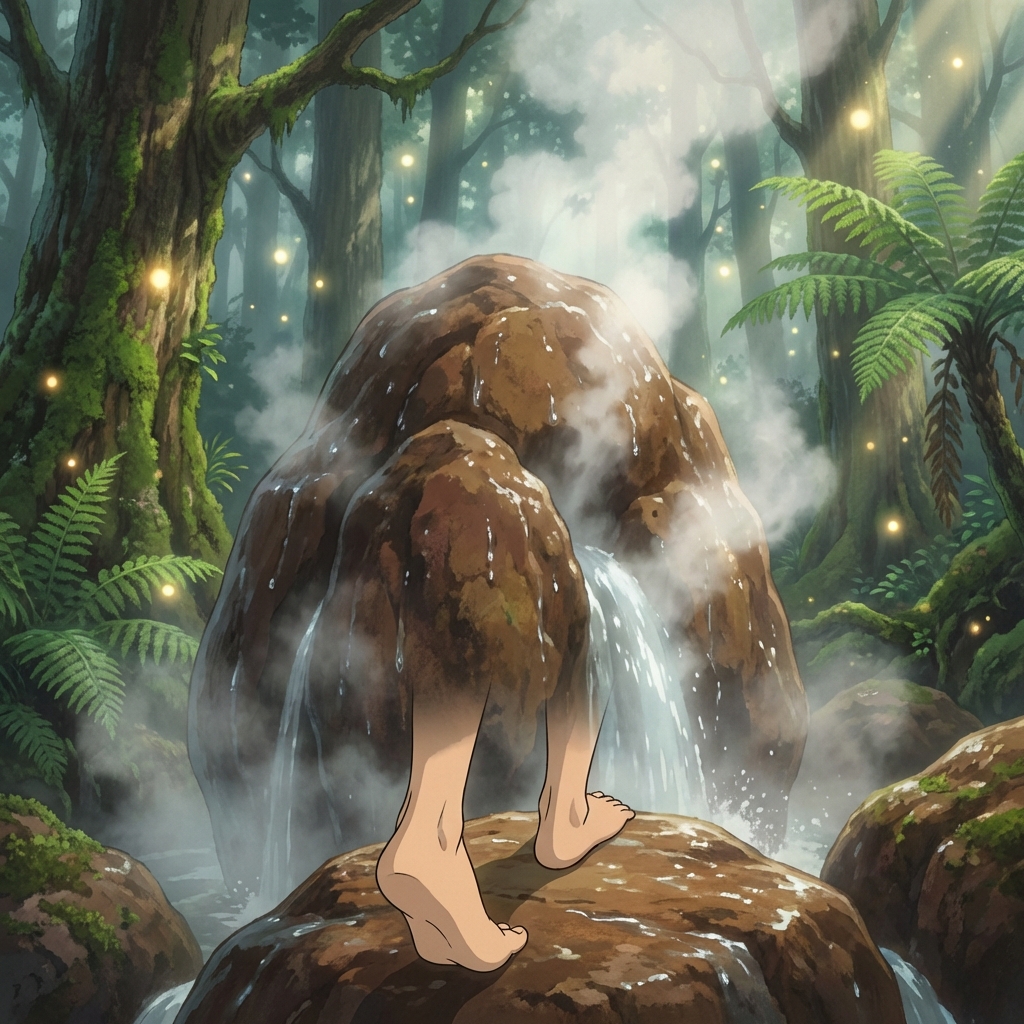
Yamagata Prefecture is proud of the sacred sites of Dewa Sanzan (Mt. Haguro, Mt. Gassan, and Mt. Yudono). Among these, one place is revered as the “Oku-no-in” (inner sanctuary) and is considered the most sacred, with strict prohibitions against speaking of or hearing about it, encapsulated by the ancient admonition, “Speak not, hear not.” That place is Yudono-san Jinja.
This time, we will delve into the true nature of this veiled sacred realm and the mysterious legends that lie within.
Basic Information
Location: 7 Rokujuri-yama, Tamugimata, Tsuruoka City, Yamagata Prefecture
Opening Period: June 1st to early November (Closed in winter due to heavy snow)
Visiting Hours: 9:00 to 16:00 (May vary by season)
Access: Approximately 40 minutes by car from Shonai Asahi IC. Take the Yudono-san Toll Road, then from the parking lot, proceed to the main shrine (Hongu) by shuttle bus or on foot.
“Speak not, hear not” – The Rule of Silence Still Observed
Yudono-san Jinja has a highly unique set of rules not found at other jinja.
First, photography is strictly prohibited inside the Hongu (main sanctuary). Furthermore, visitors must remove their shoes at the entrance and proceed barefoot. The most significant characteristic is the admonition, “Speak not, hear not,” which forbids disclosing to others what one has seen or experienced within the Hongu.
Why is it kept so secret? Because this is a “sacred realm among sacred realms,” possessing no artificial shrine buildings, and preserving the original form of “nature worship” where nature itself is revered as kami.
The Shocking Go-shintai: A jinja without a shrine building
Yudono-san Jinja does not have what is typically called a “honden” (main hall). After receiving purification and climbing the rocky path barefoot, what appears is a colossal, reddish-brown sacred rock (reigan) from which hot water springs forth.
This enormous rock, with its continuously gushing hot water, is the go-shintai (sacred object housing the kami) itself. Visitors believe that by stepping barefoot on this warm rock and directly feeling the kami’s breath, their souls are purified.
The Destination of the “Journey of Rebirth”
The pilgrimage to Dewa Sanzan has been known as a “journey of rebirth” since the Edo period.
Mt. Haguro: A mountain for praying for happiness in the present world (Present)
Mt. Gassan: A mountain for the afterlife and for consoling the spirits of ancestors (Past)
Mt. Yudono: A mountain for receiving new life and being reborn (Future)
Mt. Yudono is the land of “Future” where those who have completed their training in the past and present finally arrive. It is believed that by going barefoot here and directly receiving the earth’s energy, one is reborn as a new self.
Mystery and Behind-the-Scenes: Deep Connection with Sokushinbutsu
The area around Mt. Yudono, especially a place called “Sennin-zawa” (Hermit’s Ravine), is a sacred site where shugenja (ascetic practitioners) once undertook life-threatening training.
Here, the legend of “Sokushinbutsu” (self-mummified monks), who transformed their own bodies into Buddhas, strongly persists. Many of the Sokushinbutsu still existing in Japan were practitioners of the Yudono-san lineage (Shingon-shu Daigo-ha), who, after more than a thousand days of “mokujikigyo” (austerity involving eating only tree bark and nuts), entered the earth alive, achieving nirvana while praying for the salvation of all sentient beings.
Famous figures like Monk Tetsumonkai Shonin and Monk Shinnyokai Shonin also underwent rigorous training in the harsh natural environment of Mt. Yudono. Even now, an indescribable, tense spiritual atmosphere (reiki) hovers around the Hongu.
Related Works and Sacred Site Pilgrimage Information
Due to its overwhelming mystique, Mt. Yudono has been depicted as an important setting in the world of fiction.
Ushio and Tora (Kazuhiro Fujita):
The main temple of “Koha Meishu” that appears in the work is said to be partly modeled after Dewa Sanzan. In particular, the depiction of the legendary shakujo (monk’s staff) with immense power and the monks who undergo rigorous training strongly reflects the atmosphere of Shugendo (mountain asceticism) passed down at Mt. Yudono.
Yudonosanroku Noroi Mura (The Cursed Village at the Foot of Mt. Yudono) (Masao Yamamura):
This mystery work, also famous as a Kadokawa film, was instrumental in popularizing the phrase “Speak not, hear not” associated with Mt. Yudono. While it is a chilling story centered on Sokushinbutsu and the customs of a secluded village, the image of Mt. Yudono as a “hidden sacred site” heavily influenced its backdrop.
Yudono-san Jinja is not merely a tourist destination. The moment you step inside, you enter a “mythological time” completely detached from modern society.
“What truly lies within?” To find the answer, we encourage you to discover it for yourself, while honoring the rule of silence.
Related Links / References
[1]
[2]
[3]
[4]
[5]
[6]
[7]
[8]
[9]
[10]
[11]
[12]
[13]
[14]