 By ando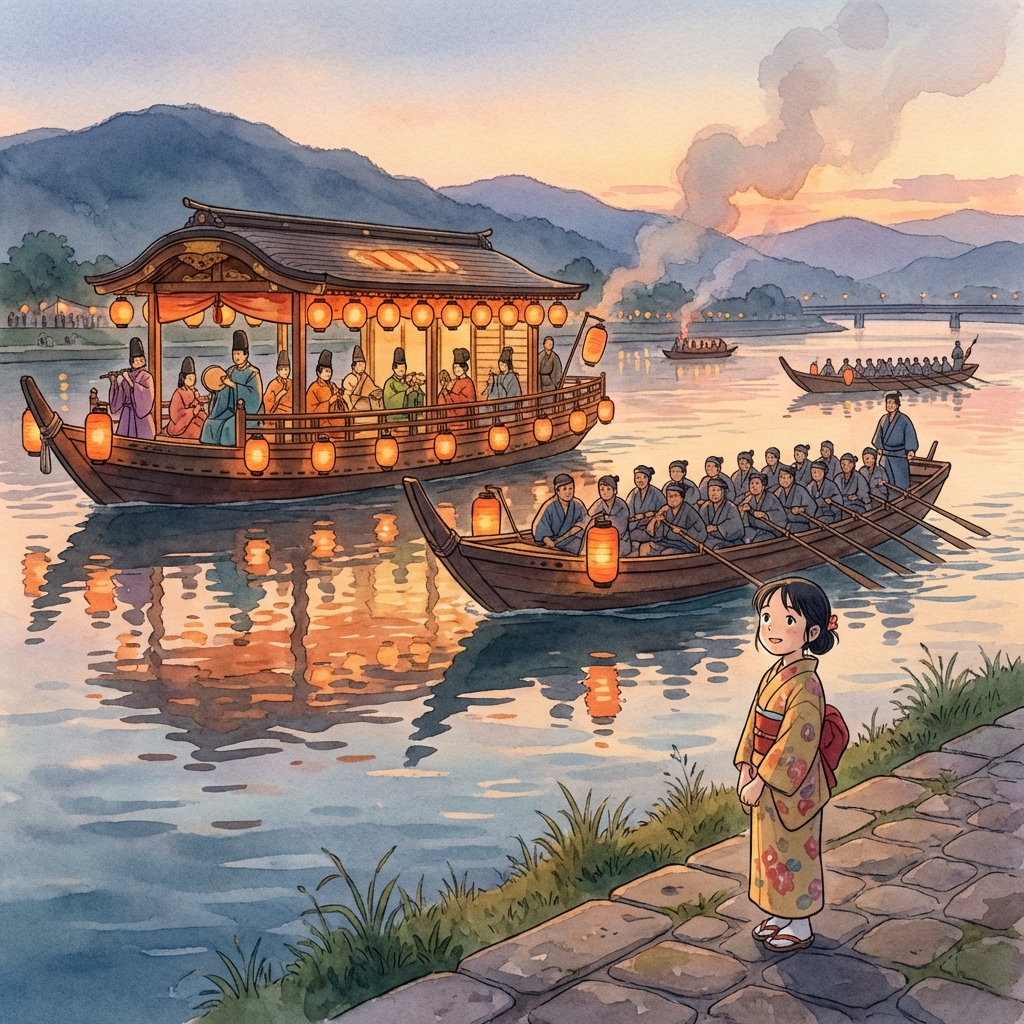
Sumiyoshi Jinja, located in Sumiyoshicho, Naka-ku, Hiroshima City, has long been affectionately known as “Osumi-san” and is a symbolic place of Hiroshima’s summer. In Hiroshima, a city of water, this jinja (shrine) gathers faith as a kami (deity) for safe voyages and warding off evil. It holds numerous episodes that have overcome the rough seas of history.
Basic Information
Location: 5-10 Sumiyoshicho, Naka-ku, Hiroshima City, Hiroshima Prefecture
Enshrined Kami: The Sumiyoshi Sanjin (Three Sumiyoshi Kami): Sokotsutsu-no-o-no-mikoto, Nakatsutsu-no-o-no-mikoto, and Uwatsutsu-no-o-no-mikoto. Okuninushi-no-kami and Kotoshironushi-no-kami are also enshrined in the subsidiary shrine.
Founded: 1733 (Kyoho 18). It began when Mokujiki Kaien, a Shingon Buddhist monk, petitioned the Funabugyo (shipping magistrate) and invited the kami from Sumiyoshi Taisha in Osaka to be enshrined here (kanjo).
Sumiyoshi Matsuri (Sumiyoshi-san), One of Hiroshima’s Three Great Festivals
The “Hiroshima San Dai Matsuri” (Three Great Festivals of Hiroshima) that color Hiroshima’s summer are Toka-san in June, Ebessan in November, and Sumiyoshi-san in July.
Particularly famous is the Hiroshima Kangensai, which unfolds on the Motoyasu River (formerly part of the Ota River). This festival is modeled after the Kangensai held at Itsukushima Jinja on Miyajima. In this elegant and spirited Shinto ritual, a Kogidenma-sen (rowing procession boat) tows a Gozabune (sacred boat) carrying the divine spirit, moving upstream accompanied by the sounds of gagaku (ancient Japanese court music).
Mysterious Episodes: Divine Power That Stopped a Fire, and Relocation Due to “Smoke”
Sumiyoshi Jinja holds a mysterious legend that speaks of its divine efficacy.
In 1798 (Kansei 10), a massive fire broke out in Kakomachi, a town situated in front of the jinja. The fire was spreading with fierce intensity, but it is said that, mysteriously, it stopped abruptly when it reached the grounds of Sumiyoshi Jinja.
However, while the fire was stopped, the shrine building was badly soiled by the smoke from the fire. People at the time believed it was “awe-inspiring (or irreverent) for a sacred shrine building to be defiled by smoke,” and thus, in the following year, 1799, the jinja was relocated (senza) to its current site. The date of this relocation became the origin of the current Reitaisai (annual grand festival / summer festival).
The ‘A-bombed Pine’ and ‘Handrail’ That Convey Memories of the Bombing
Sumiyoshi Jinja, located approximately 1.3 km from the hypocenter, had its shrine building completely burned down by the atomic bomb on August 6, 1945. However, a pine tree on the jinja grounds endured the intense heat rays and blast, surviving with parts of it burnt. This “Hibaku Matsu” (A-bombed pine) is still preserved on the grounds today, quietly conveying the preciousness of peace.
Furthermore, the handrail of Sumiyoshi Bridge, which stands near the jinja, is chosen as one of the “Genbaku Jukkei” (Ten Atomic Bomb Views) as a valuable remnant retaining its appearance from the time of the bombing.
Pilgrimage Site: Setting of the Anime ‘In This Corner of the World’
Sumiyoshi Jinja and its surroundings are also known as a pilgrimage site for the film and anime ‘In This Corner of the World’.
Sumiyoshi Jinja and Sumiyoshi Bridge appear in scenes where the protagonist, Suzu, visits Nakajima-Honmachi (now the area around Peace Memorial Park) in her childhood, and in depictions of daily life in pre-war Hiroshima. The vibrant scenery of this area, which once flourished as a hub for water transport and where many people came and went, has been etched into the hearts of many fans through the work. Visiting the jinja allows one to reflect on the atmosphere of that era depicted in the film and the lives of Hiroshima’s people who lived with the river.
Setsubun Specialty: The ‘Yakikagashi Shinji’ Ritual
While its summer festival is famous, the winter “Setsubun-sai” (Setsubun Festival) should not be missed. In the “Yakikagashi Shinji,” a ritual recreating a custom from the Heian period, the heads of 1,000 sardines are roasted. Their strong smell and smoke are used to drive away oni (evil spirits). The sardine meat roasted during this ritual is offered to worshippers, and the event bustles with people wishing for good health and warding off illness.
As the guardian kami of the city of water, and as a witness to history, Sumiyoshi Jinja continues to gently watch over the city of Hiroshima and its people, unchanging even today.
Related Links and References
Archive of Anime Sacred Site Information in Hiroshima Prefecture | Anime Tabi
Protecting Tradition, Powerfully Rowing Forward: Ebajima’s Kogidenma
Kangensai of Sumiyoshi Jinja: New Heart of Hiroshima to the World
Hiroshima Culture Encyclopedia – Kaidenma
Hiroshima’s Three Great Festivals “Sumiyoshi-san” – Hiroshima Kangensai also Held for the First Time in 3 Years – Hiroshima Keizai Shimbun
Sumiyoshi Jinja
Sumiyoshi Jinja (Naka-ku, Hiroshima City) – Wikipedia
Sumiyoshi Jinja (Naka-ku, Hiroshima City)