 By ando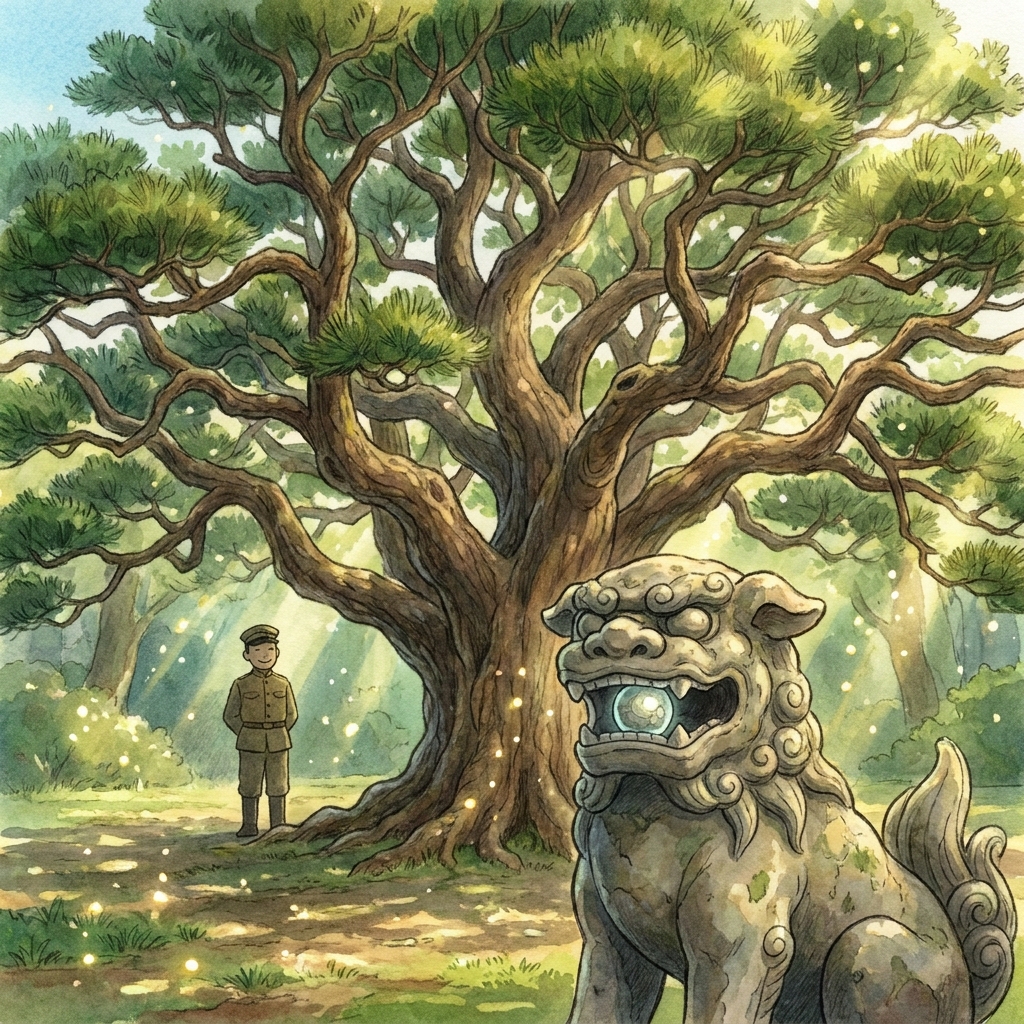
Basic Information
Location: 1-4 Kodama-cho, Shunan City, Yamaguchi Prefecture
Enshrined Kami: Kodama Gentaro no mikoto
Founded: Taisho 12 (1923)
Divine Blessings: Luck in competitions, academic success, fulfillment of wishes
Kodama Jinja, quietly nestled in the downtown area of Shunan City (formerly Tokuyama City), Yamaguchi Prefecture, is a jinja that enshrines Kodama Gentaro. He was a prominent Army General of the Meiji era who also served as Governor-General of Taiwan and Minister of Home Affairs. Known as a brilliant strategist who led Japan to victory in the Battle of 203 Hill during the Russo-Japanese War, many worshippers visit the jinja even today, revering him as a “kami of victory.”
—
Episodes, Legends, and Untold Stories
1. The Mystery of the Shrine Building that “Moved” from Enoshima
Actually, the shrine building at Kodama Jinja in Shunan City was not originally located here. The main shrine building and auxiliary structures of Kodama Jinja on Enoshima Island in Fujisawa City, Kanagawa Prefecture, were relocated to the current site – the former residence of General Kodama – in Taisho 12 (1923).
Enoshima was a place Gentaro deeply loved for its scenic beauty, while Shunan City is his birthplace. These two Kodama Jinja share a unique history, with the very buildings themselves connected across the sea.
2. Deep Ties with Taiwan and the “Rolling Ball in the Mouth”
As the 4th Governor-General of Taiwan, Kodama Gentaro made significant contributions to Taiwan’s modernization. For this reason, many elements within the shrine grounds evoke a connection with Taiwan.
Taiwan White Pine: A young tree gifted from Taiwan in Taisho 14 (1925) has now grown into a magnificent large tree, welcoming worshippers.
Calligraphy by former President Lee Teng-hui: Within the shrine grounds stands a stone monument inscribed with calligraphy by Taiwan’s former President, Lee Teng-hui, indicating that he is still deeply respected by the people of Taiwan.
Furthermore, while the komainu (guardian dog-lion statues) at Enoshima’s Kodama Jinja are a special “Taiwanese style” with rolling balls inside their mouths, the komainu around Shunan City’s Kodama Jinja also draw their roots from “Yamaguchi Komainu,” a style whose techniques Yamaguchi stonemasons brought to Taiwan, narrating a history of cultural exchange between Japan and Taiwan.
3. An Untold Story of the Man Called “Genius” and His Excessive Humility
Gentaro was such a brilliant military strategist that Major Klemens Wilhelm Jacob Meckel, a German military advisor, once declared, “Japan has Kodama. As long as Kodama is there, Japan will win.” Yet, Gentaro himself was an extremely selfless and humble person. An amusing and humble anecdote recounts that after the Russo-Japanese War, upon seeing his own photograph displayed as a “kami of victory” at an exhibition, Gentaro mingled with the visitors and whispered to them, “This man, Kodama, is not that great of a person.”
4. From a Tragic Site to a “Sacred Place”
The shrine grounds are the former site of the Kodama family residence. In fact, this was also the tragic place where Gentaro’s adoptive older brother, Kodama Jirohiko, was assassinated by a rival faction when Gentaro was a child. Gentaro overcame the crisis of his family’s potential downfall and later became a national hero. The starting point of his tumultuous life is now the peaceful shrine grounds.
—
Pilgrimage Information for Related Anime and Media “Sacred Sites”
Kodama Gentaro is also depicted as a very popular character for history enthusiasts, as well as anime and manga fans.
Golden Kamuy
In the work, Kodama Gentaro appears as a key figure involved in the establishment of the Seventh Division. As he is depicted as a hero of the Russo-Japanese War, which forms the backdrop of the story, an increasing number of fans visit this jinja as one of their “sacred sites.”
Saka no Ue no Kumo (Clouds Over the Hill)
This work, a representative masterpiece by Ryotaro Shiba which was also adapted into a TV drama, portrays Kodama Gentaro as one of its main characters. For fans moved by his strategic brilliance during the Siege of Port Arthur, this jinja, standing on his birthplace, is an indispensable pilgrimage spot.
Kodama Jinja, though located in the heart of Shunan City, allows you to feel the tumultuous Meiji era and a touch of Taiwan the moment you step onto its grounds. It is a must-visit spot for anyone facing a challenge or those who wish to delve into historical mysteries.
—
Related Links and References
[1] Yamaguchi History Introduction #06 | Yamaguchi University United Graduate School of Veterinary Sciences Prospective Students Site
[2] Kodama Jinja
[3] Kodama Jinja | Shunan City, Yamaguchi Prefecture – Tourism to Unwind Your Daily Life
[4] Kodama Jinja
[5] History | Kodama Jinja | Enoshima
[6] Shrines and Temples of Yamaguchi ★ Kodama Jinja Edition | Could it be living in Yamaguchi Prefecture? A Blog by a Complicated (Middle-Aged) Woman…
[7] Kodama Gentaro – NPO International Student Association / Kogaku Shimbun
[8] Places associated with Kodama Gentaro – Shunan City, Yamaguchi Prefecture
[9] Taiwan White Pine and Kodama Jinja: Visiting Tokuyama, the hometown of Kodama Gentaro: Chieko Chiba’s Journey of Excellence
[10] Episode 1 Introduction – Japan’s Smallest Giant, Army General Kodama Gentaro (Ho Chi Minh) – Kakuyomu