
 By ando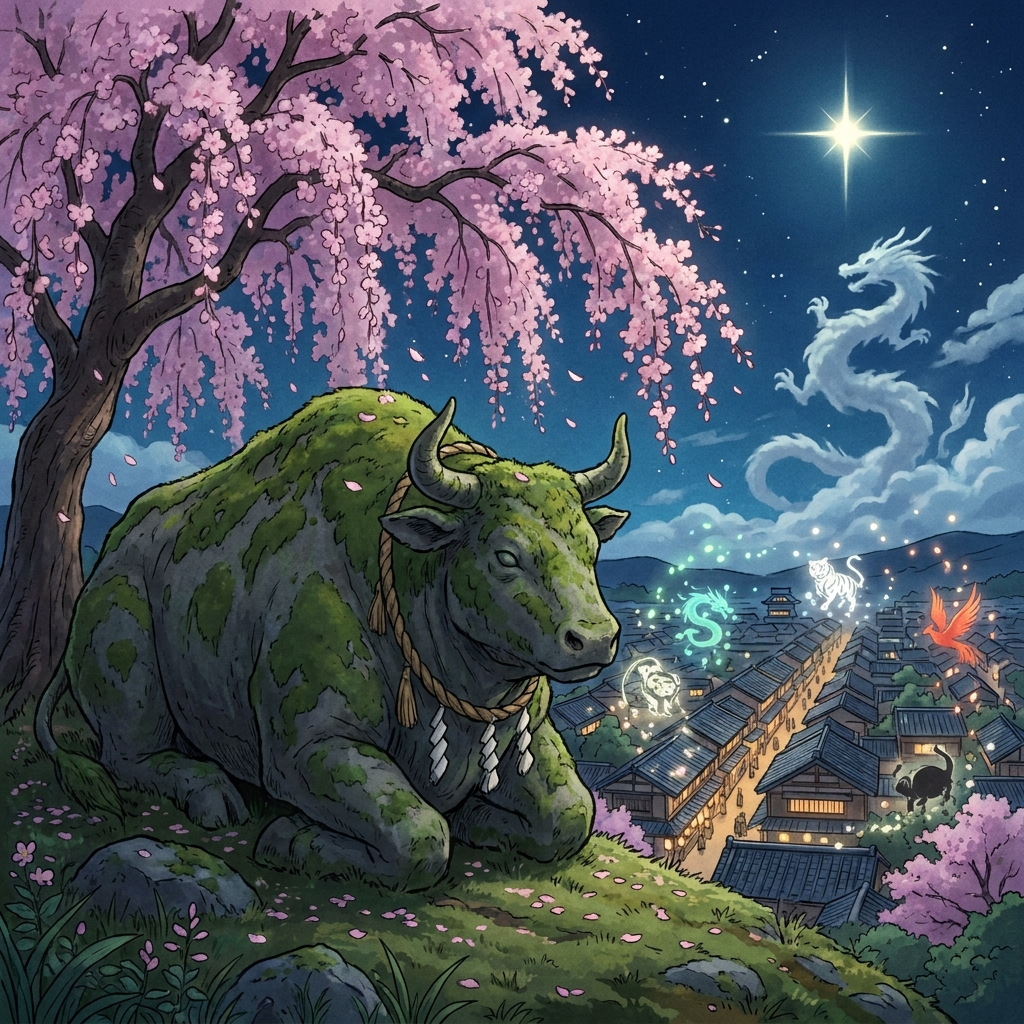
Kiryu City in Gunma Prefecture is a city of textile industries, historically renowned as “Nishijin in the West, Kiryu in the East.” Standing enshrined at the northern edge of this cityscape, quietly overseeing the city’s development throughout history, is Kiryu Tenmangu jinja. This time, we will delve into the charm and mysteries of this historic jinja, whose Honden (main sanctuary), Heiden (offertory hall), and Haiden (worship hall) were just designated National Important Cultural Properties in 2023.
Basic Information
Location: Kiryu City, Gunma Prefecture, Tenjin-cho 1-2-1
Enshrined kami: Sugawara no Michizane (Tenjin-sama), Ame no Hohi no Mikoto
Main Blessings: Academic success, Protection from evil, Industrial prosperity, Family safety and harmony
History: According to shrine legend, it is an ancient jinja said to have been founded as “Isobe Myojin” during the reign of Emperor Keiko (around the 1st century). In 1591, following the construction of Kiryu Shinmachi under orders from Tokugawa Ieyasu, it was relocated to its current site to serve as the town’s starting point (shukuto).
“Nikko’s Back Parlor”? Breathtaking Polychrome Carvings
Kiryu Tenmangu’s greatest highlight is undoubtedly the intricate carvings that adorn its entire shrine building (shaden). The current shaden was completed during the Kansei era (1789-1793) in the late Edo period, crafted by master artisans like Sekiguchi Bunjiro, who also worked on the repairs of Nikko Toshogu.
In particular, the carvings on the Honden walls, themed after the “Twenty-Four Paragons of Filial Piety,” represent the pinnacle of craftsmanship from that era. Their splendor has earned them the praise of being “masterpieces following the lineage of Nikko Toshogu’s carving techniques.” A closer look reveals humorous lions and even mysterious carvings that seem to be “pulling a face,” showcasing the playful spirit of the artisans.
The City’s “North Star”? Mysteries Hidden in Urban Planning
Kiryu Tenmangu jinja possesses an aspect beyond that of a mere shrine; it served as a “cornerstone of urban planning.”
During the Edo period, when Kiryu Shinmachi (the new town of Kiryu) was developed, the jinja was strategically placed at the northern end of Honcho-dori, the town’s main street. This arrangement is said to have been based on Feng Shui and star worship, envisioning the jinja as the “North Star” from which the town would expand southward.
In fact, the shrine grounds (keidai) are known as a “Feng Shui power spot,” and within the inner sanctum of the Honden are enshrined the Four Divine Beasts (Shijin) protecting the four directions: Seiryu (Azure Dragon), Byakko (White Tiger), Suzaku (Vermilion Bird), and Genbu (Black Tortoise). It is believed that by praying here, one can receive the energy (ki) of heaven and earth, attracting a continuous stream of people wishing for improved fortune.
Legends and Backstories: The Stone Ox and the Origin of “Kiryu”
Within the shrine grounds, unique legends related to “oxen” remain, characteristic of Tenmangu jinja.
Legend of the Ox Stone (Ushi-ishi): There is a legend that a kami once tied up a lazy ox with a rope to admonish it, but the ox remained unrepentant and turned into a stone. On the sando (approach path), there is also a haiku monument inscribed with Matsuo Basho’s verse inspired by this legend: “Ushi-ishi ya / hikare tazuna ni / ito-zakura” (Ox stone / by the pulled rein / thread-like cherry blossoms).
The “Kiryū” Carvings: On the front of the Honden, there are carvings of an ascending dragon and a descending dragon. One theory suggests a romantic backstory that this “Kiryū” (noble dragon) became one of the origins for the place name “Kiryu.”
Anime Pilgrimage: The Setting for “The Flowers of Evil”
Kiryu City is known as the setting for the popular manga and anime “Aku no Hana” (The Flowers of Evil) by Shuzo Oshimi.
In the work, the Tenjin-cho area around Kiryu Tenmangu and the old townscape of Honcho-dori, which extends from the jinja, are depicted as important landscapes that form the story’s unique atmosphere, which is both profound and somewhat stifling. The presence of this Tenmangu jinja is particularly felt along the school routes the protagonists walk and in the perspectives looking down over the city. For fans, it has become an indispensable pilgrimage spot to trace the poignant memories of youth depicted in the work.
Best Time to Visit: On the Day of the “Old Tools & Antique Market”
On the first Saturday of every month, a large-scale antique market, counted as one of the “Three Great Kanto Antique Markets,” is held within the shrine grounds. Over 80 shops from across the country gather, and the sight of used kimonos, ceramics, old tools, and more lined up seems to convey the history of the shrine grounds, once bustling with textile markets.
The craftsmanship hidden in its intricate carvings, the ancient wisdom embedded in the city’s design, and its connection to the world of anime. Kiryu Tenmangu jinja is a place full of profound charm, offering new discoveries with every visit.
Related Links and References
[1] 桐生天満宮と上州の彫物大工 – あかがねの道 (https://akaganekaidou.jimdofree.com/%E6%A1%90%E7%94%9F%E5%A4%A9%E6%BA%80%E5%AE%AE%E3%81%A8%E4%B8%8A%E5%B7%9E%E3%81%AE%E5%BD%AB%E7%89%A9%E5%A4%A7%E5%B7%A5/)
[2] https://www.kiryucci.or.jp/html/20tayori/kiryukikou/pdf/80_1707tayori.pdf
[3] 桐生天満宮|由緒ある関東五大天神の歴史と見どころ、参拝情報を完全ガイド – わのっとメディア (https://waknot.com/spot/5096)
[4] 桐生天満宮 (桐生市) (https://genbu.net/data/kouzuke/kiryutenman_title.htm)
[5] 由緒・歴史 – 桐生天満宮公式ホームページ (https://kiryutenjin.jp/yuisyo/)
[6] 11年越しの聖地巡礼~惡の華 中学生編~|Rera (https://note.com/rera3342/n/n51b617f566e8)
[7] https://www.youtube.com/watch?v=MCBM1v22Mf0
[8] 桐生天満宮 (https://gunma.mytabi.net/kiryu-tenmangu-shrine.php)
[9] たまぽん通信一覧 / たまぽんギフト (https://tamapongift.com/article/2022/08/gumma-anime.html)