
 By ando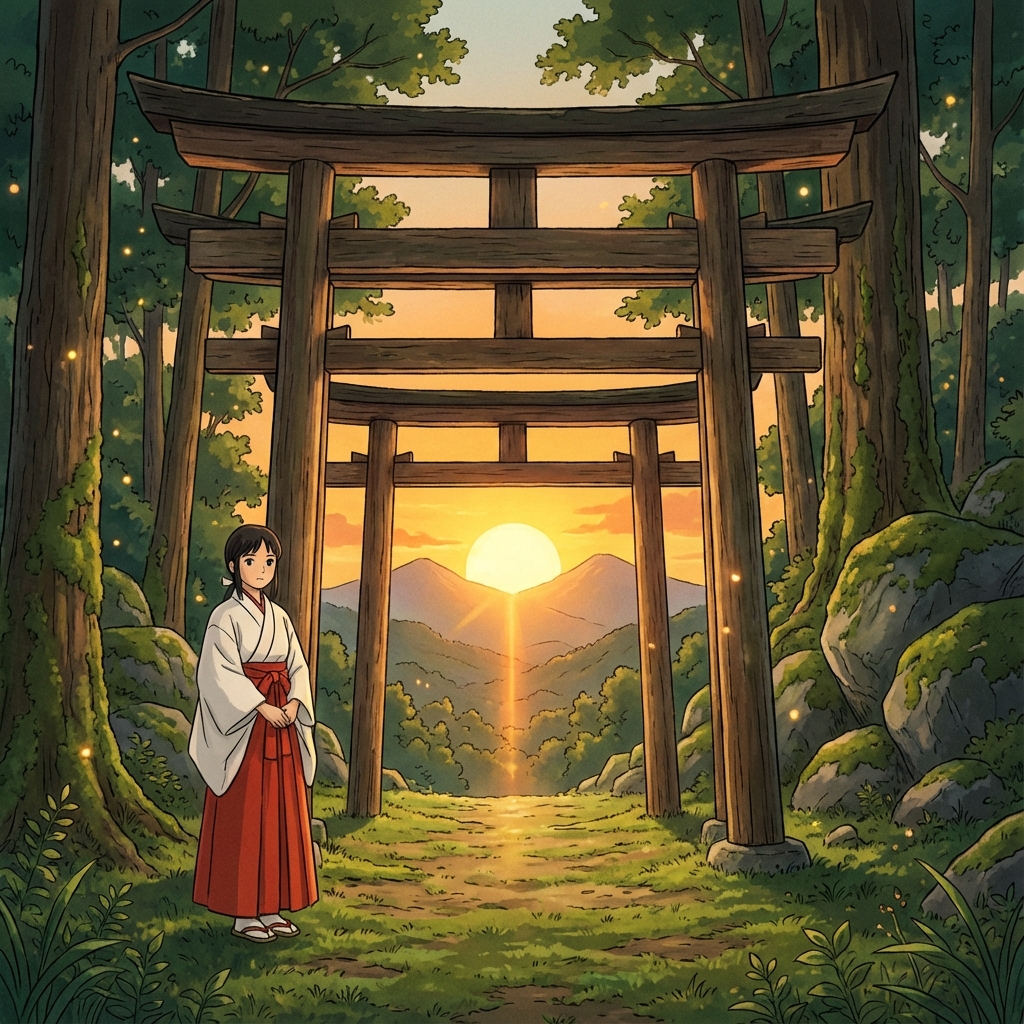
Walking along the Yamanobe-no-Michi, said to be Japan’s oldest road, in Sakurai City, Nara Prefecture, you will suddenly encounter a tranquil space. This is Hibara Jinja, a sessha (subsidiary shrine) of Omiwa Jinja and an ultimate power spot known to those in the know.
This time, we will delve into the surprising history hidden within this jinja and the mysteries that remain unsolved to this day.
Basic Information
Here is some basic information about Hibara Jinja. It is located in Miwa, Sakurai City, Nara Prefecture. The main kami enshrined is Amaterasu Omikami. A unique feature of this jinja is that it preserves Japan’s oldest form of worship, as it has neither a main sanctuary (honden) nor a worship hall (haiden).
The Beginning of “Moto-Ise” – The First Place Where Amaterasu Omikami Descended
Hibara Jinja is also known as “Moto-Ise,” meaning the “Original Ise.” While Amaterasu Omikami is currently enshrined at Ise Jingu in Mie Prefecture, she was once worshipped within the imperial palace where the Emperor resided. However, during the reign of the 10th Emperor Sujin, the Emperor, fearing the kami’s divine power, decided to enshrine her outside the palace.
At that time, she was entrusted to Princess Toyosukiirihime-no-Mikoto, and the first place she was moved to was this very site of Hibara Jinja, known as Yamato Kasamui-mura. This location marks the starting point of Amaterasu Omikami’s long journey that eventually led to Ise, making it, so to speak, the “origin of Ise Jingu.”
No Worship Hall or Main Sanctuary? The Enigmatic Mitsu-torii
What first surprises visitors to Hibara Jinja is the absence of a “honden” (main sanctuary) or a “haiden” (worship hall), which are typically found at most jinja. Instead, there is only the mysterious “Mitsu-torii,” a gate composed of three torii linked side-by-side.
This torii serves as a sacred boundary, allowing direct worship of the holy Mount Miwa, which rises behind it. This style of “having no buildings and worshipping nature itself as kami” strongly preserves the form of primitive Shinto, imbuing visitors with an overwhelming, indescribable sense of sacredness. Incidentally, the origins and precise meaning of this Mitsu-torii remain shrouded in many mysteries to this day.
The Path of the Sun (Leyline) and the Mystery of Nijozan
Hibara Jinja holds a grand mystery related to ancient astronomy and geomancy: the theory of the “Path of the Sun” (leyline).
At latitude 34 degrees 32 minutes, Ise Jingu, Hibara Jinja, and Nijozan are aligned in a straight line. On the vernal and autumnal equinoxes, the sun, which rises from the direction of Ise, passes directly over Hibara Jinja and sets between the male and female peaks of Nijozan.
In particular, the sunset over Nijozan viewed through Hibara Jinja’s Mitsu-torii is renowned for being “too divine,” and it is not hard to imagine that ancient people overlaid the image of the sun kami (Amaterasu Omikami) onto this magnificent sight.
Behind the Scenes: The Legend of Ise and Yamato as “Mirror Images”
An interesting anecdote involves the relationship between Futami-ga-ura in Ise and Hibara Jinja. While the “morning sun” rises between the Meoto Iwa (Husband-and-Wife Rocks) at Futami-ga-ura in Ise, the “evening sun” sets between the peaks of Nijozan at Hibara Jinja.
One theory suggests that these two locations share a “mirror image” relationship, and a grand cycle of sun worship may have been formed where the sun was bid farewell in Yamato (Hibara) and welcomed in Ise (Futami-ga-ura).
Points for Pilgrimage
While the Yamanobe-no-Michi is popular as a hiking trail, you will especially feel a change in the air around Hibara Jinja. Within the grounds, you will also find Toyosukiirihime-no-Miya, which enshrines Princess Toyosukiirihime-no-Mikoto, the first Saio (imperial priestess). She is also worshipped as a guardian kami for women.
When you wish to escape the urban hustle and bustle and touch upon the very roots of Japanese faith, stand before the Mitsu-torii and feel the wind blowing down from Mount Miwa. There, an unchanged “original landscape of prayer” stretches out, just as it has for thousands of years.
Related Links and References
Spipedia article on Hibara Jinja, a secret power spot adorned with ancient sun worship, featuring its precious Mitsu-torii. Sentimental Journey blog post about Hibara Jinja, Nijozan, and the sunset, “The Path of the Sun, and a World Upside Down.” Cultural Experience blog post on Hibara Jinja (First Moto-Ise) in Nara Prefecture – Journal of Humanities Research. Hibara Jinja website. Sakurai City Tourism Association page for Hibara Jinja (Sakurai City, Miwa). Yamato Furusato Techo blog post, “Hibara Jinja – The Source of Faith Led by Mitsu-torii, a Shrine Without a Main Hall Leading to Ise Jingu.” Omiwa Jinja website section on Hibara Jinja. Ameblo blog post, “Sunset over Nijozan.” Kyo no Reijo 22 Shrines, Chushichi Shrines, Omiwa Jinja.