 By ando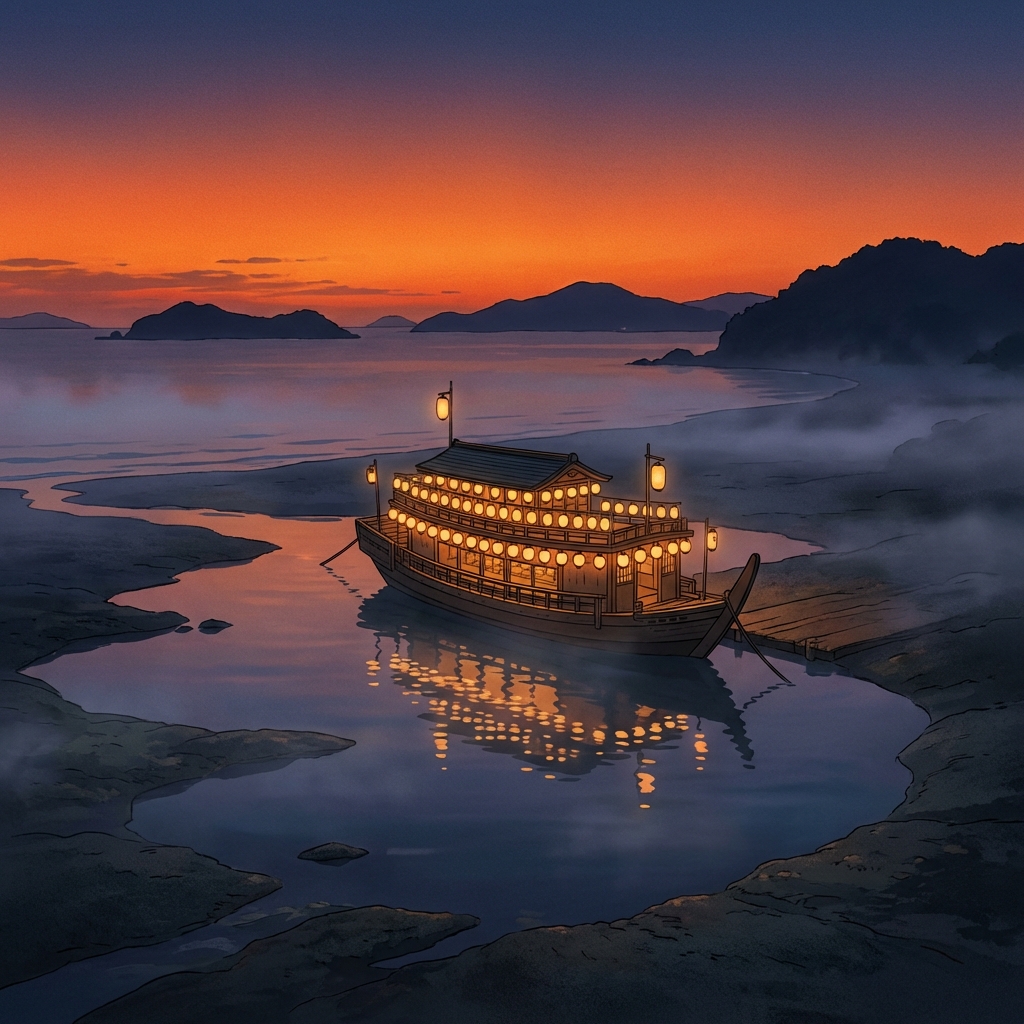
Do you know Jigozen jinja (Jigozen Jinja), located in Hatsukaichi City, Hiroshima Prefecture? It is a highly prestigious jinja, situated on the opposite shore from the World Heritage Site Itsukushima Shrine (Itsukushima jinja), and revered since ancient times as the “Outer Shrine (Geku) of Itsukushima jinja.” This time, we will introduce the profound history and intriguing episodes of this jinja, a place we highly recommend visiting before you embark on your pilgrimage to Miyajima.
Basic Information
Location: 5-17-1 Jigozen, Hatsukaichi City, Hiroshima Prefecture
Enshrined Kami: Ichikishimahime-no-mikoto, Tagorihime-no-mikoto, Tagitsuhime-no-mikoto (the Munakata Sanjojin, or Three Goddesses of Munakata)
Founded: First year of Empress Suiko’s reign (593 AD)
The Role of Jigozen jinja as ‘Maezashi’ (Front Gate)
Jigozen jinja is said to have been founded in the exact same year as Itsukushima jinja, 593 AD, the first year of Empress Suiko’s reign. In ancient times, Miyajima (Itsukushima) itself was considered a sacred body of kami, an island deity, making it difficult for people to live there or even land on the island. Therefore, Jigozen jinja, located on the opposite shore, served as a ‘Maezashi’ (front gate), essentially acting as the ‘front gate’ for worshipping Itsukushima jinja.
Until the Edo period, the sea came right up to the front of the jinja, with a torii gate standing in the water. Today, the sea still stretches beyond National Route 2 and the railway tracks, but it is said that in the past, boats could directly access the jinja grounds.
Episodes, Legends, and Mysteries
1. The Mystery of the ‘Boat-Mooring Pillar’ in the Haiden (Worship Hall)
If you look closely at the Haiden (Worship Hall) of Jigozen jinja, you will notice a mysterious pillar on the right side that appears to be cut off midway, not reaching the ceiling. Legend has it that this pillar was used to moor boats when the sea was right next to the jinja, for worshippers arriving by boat. It is extremely rare throughout Japan to find remnants of boat-mooring structures inside a jinja building.
2. The ‘Tidal Pond’ that Appears with the Tides
Next to the jinja grounds is a place called ‘Shio-no-ike’ (Osu-bori), or the Tidal Pond. This sacred spot is where the Gosabune (sacred boat) from Miyajima docks during Itsukushima jinja’s Kangen-sai (Court Music Festival). In the past, the pond’s appearance changed with the ebb and flow of the tide, and it still conveys a mystical atmosphere as the place where the kami cross the sea to ‘return home’ for a visit.
3. The Fierce Ritual of ‘Umatobashi’ (Goryoe-sai Festival)
During the Goryoe-sai festival (Goryoe-sai), held annually on May 5th of the lunar calendar, a Yabusame (horseback archery) ritual known as ‘Umatobashi’ (horse racing) takes place. It was once a magnificent festival where horses galloped at high speed along the sandy beach coastline. Today, due to changes in the surrounding environment, its form has been adapted, but it remains a moment when the quiet town of Jigozen is enveloped in fervor.
4. Mori Motonari and the Untold Story of the Battle of Itsukushima
For history buffs, its connection to the Battle of Itsukushima in Koji 1 (1555) is not to be missed. It is said that during this battle, where Mori Motonari defeated Sue Harukata, Mori’s forces gathered within the grounds of Jigozen jinja before launching their attack on Miyajima from here. It is as if the spirit of the warriors who prayed for victory still lingers in the shrine grounds.
Anime Pilgrimage Spot Information
Jigozen jinja is also known as a pilgrimage spot for the popular anime Tamayura More Aggressive (Season 2), which is set in Takehara City, Hiroshima Prefecture.
The anime features scenes depicting the Kangen-sai, one of Japan’s Three Great Boat Festivals, showing the fantastical sight of the Gosabune (sacred boat) traveling from Miyajima to Jigozen jinja. For anime fans, it is a valuable spot where they can truly experience the landscapes captured by the protagonists.
Access
Approximately a 5-minute walk from Jigozen Station on the Hiroden Miyajima Line. Located along National Route 2, it is easily accessible on your way to Miyajima.
Before crossing over to Miyajima, why not first purify yourself at Jigozen jinja, this ‘Outer Shrine (Geku)’, and gaze upon the sacred body of kami across the water? Here, you will find a form of faith that is serene and powerful, distinct from the more tourist-oriented Miyajima.
Related Links and References
[1] https://www.city.takehara.lg.jp/soshikikarasagasu/sangyoshinkoka/gyomuannai/3/2073.html Tamayura / Takehara City
[2] http://tsurebashi.blog123.fc2.com/blog-entry-273.html Tsurebashi Tamayura More Aggressive Pilgrimage Guide Episode 1 “For a year of welcome home, so”
[3] https://www.youtube.com/watch?v=mJQsuhlO9j4 YouTube
[4] https://www.motsu-tanbou.com/entry/pilgrimage-ochifuru Motsu’s Random Notes – Everyday and Sometimes Pilgrimage – Dropout Idol Fruit Tart -Stage Exploration / Pilgrimage-
[5] https://ja.wikipedia.org/wiki/%E5%BA%83%E5%B3%B6%E7%9C%8C%E3%82%92%E8%88%9E%E5%8F%B0%E3%81%A8%E3%81%9F%E4%BD%9C%E5%93%81%E4%B8%80%E8%A6%A7 List of Works Set in Hiroshima Prefecture – Wikipedia
[6] https://www.takeharakankou.jp/feature/tamayura_seichi/top Japan’s 88 Anime Pilgrimage Sites (2025 Edition) “Tamayura” Selected for 8 Consecutive Years!! | Feature | Takehara City Official Tourism Site Hiroshima Takehara Tourism Navi
[7] https://rainbow.sakura-network.jp/?page_id=501 Tamayura Pilgrimage Spot List | Rainbow Square