 By ando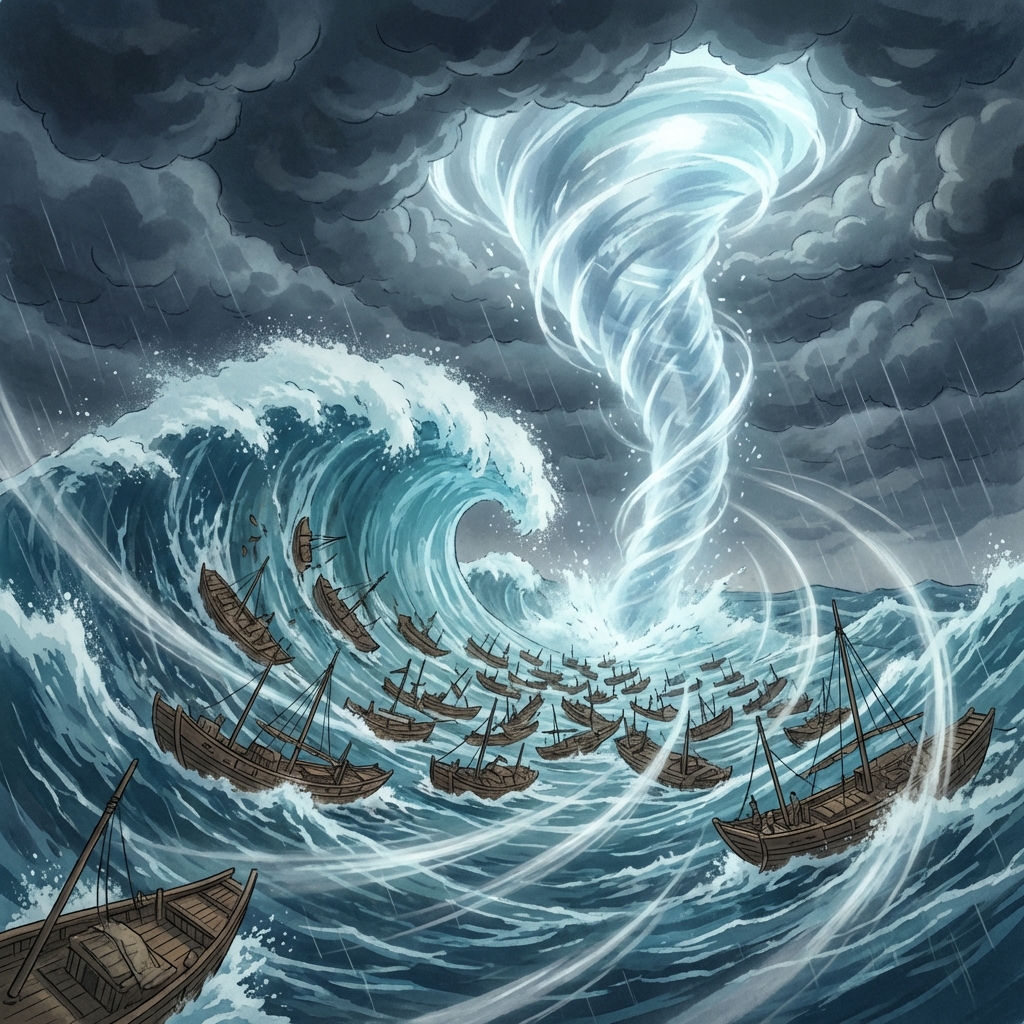
Basic Information
Kazenomiya, located very close to the Main Sanctuary of Ise Jingu Geku (Toyouke Daijingu). This is one of the four betsu-gu (auxiliary shrines) within Geku, dedicated to the kami of wind.
Enshrined Kami: Shinatsuhiko-no-mikoto, Shinatobe-no-mikoto
Location: Honmachi, Ise City, Mie Prefecture (within Ise Jingu Geku grounds)
Divine Blessings: It is revered as a kami that controls wind and rain, assisting in the growth of crops. It is also known as a power spot for good fortune, bringing “favorable winds” into one’s life.
The Legend of ‘Kamikaze’ that Repelled the Mongol Invasions and an Unprecedented Promotion
Kazenomiya holds a dramatic episode that significantly altered Japanese history.
Originally, Kazenomiya was merely a massha (sub-shrine) called ‘Kazenosha,’ which was of a lower rank than it is today. However, during the Mongol Invasions (Bunei and Koan Wars) in the Kamakura period, facing an unprecedented national crisis, prayers were offered at Ise Jingu by imperial command.
Suddenly, a fierce storm (kamikaze, or ‘divine wind’) arose, destroying the invading Mongol fleet. This miraculous victory was attributed to the divine protection of the kami of wind. In recognition of its功績, in Shoo 6 (1293), it was dramatically promoted from a massha to a betsu-gu. Such a dramatic leap in rank is extremely rare in the world of shrines, illustrating the profound belief people at the time had in the power of kamikaze.
Mysterious Connection with Naiku’s Kazahinominomiya
Within Ise Jingu, Naiku (Inner Shrine) also has a betsu-gu called Kazahinominomiya, which enshrines the same kami of wind.
In fact, it is unusual for the same kami to be enshrined in both Naiku and Geku, which underscores how significant ‘wind’ was to the Japanese, an agricultural people.
Interestingly, while Naiku’s Kazahinominomiya is located across the clear waters of the Isuzu River, Geku’s Kazenomiya is situated within a serene forest surrounded by ancient trees. Despite enshrining the same kami, Naiku is said to strongly evoke ‘the energy of water,’ while Geku evokes ‘the energy of earth.’ There’s even a belief that visiting both can balance one’s luck and energy.
Architectural Clues to its ‘Betsu-gu’ Status
If you look closely at Kazenomiya’s main sanctuary building, you will notice distinct features that set it apart from other sessha (associated shrines) and massha (sub-shrines). These are the number of katsuogi (short, horizontal logs) lined on the roof and the shape of the protruding chigi (forked finials).
As a betsu-gu, Kazenomiya is built in a magnificent style (yuiitsu-shinmei-zukuri) similar to the Main Sanctuary. However, the cut of its chigi differs from that of Geku’s Main Sanctuary. Geku’s Main Sanctuary has ‘sotoshogi’ (vertically cut) chigi, and Kazenomiya also has ‘sotoshogi’ chigi. However, Naiku’s Kazahinominomiya has ‘uchisogi’ (horizontally cut) chigi, illustrating how strictly the stylistic differences between Naiku and Geku are maintained even here.
Kazahinomi-no-Matsuri: The Ritual to Calm the Winds
The Kazahinomi-no-Matsuri festival is held annually in May and August. This festival is for praying for favorable wind and rain, and for bountiful harvests.
August, in particular, is typhoon season. This ritual, where prayers are offered to the powerful kami of wind who once repelled the Mongol invasions—asking, ‘Please, do not rage, but send gentle winds’—continues to be an important Shinto rite for wishing for Japan’s peace and stability in modern times.
When you visit Geku, don’t just stop at the Main Sanctuary. Be sure to visit Kazenomiya, where the ‘kami of wind that moved history’ rests. In the quiet forest, you might find the impetus to invite new winds into your own life.
Related Links and References
No sources available.