 By ando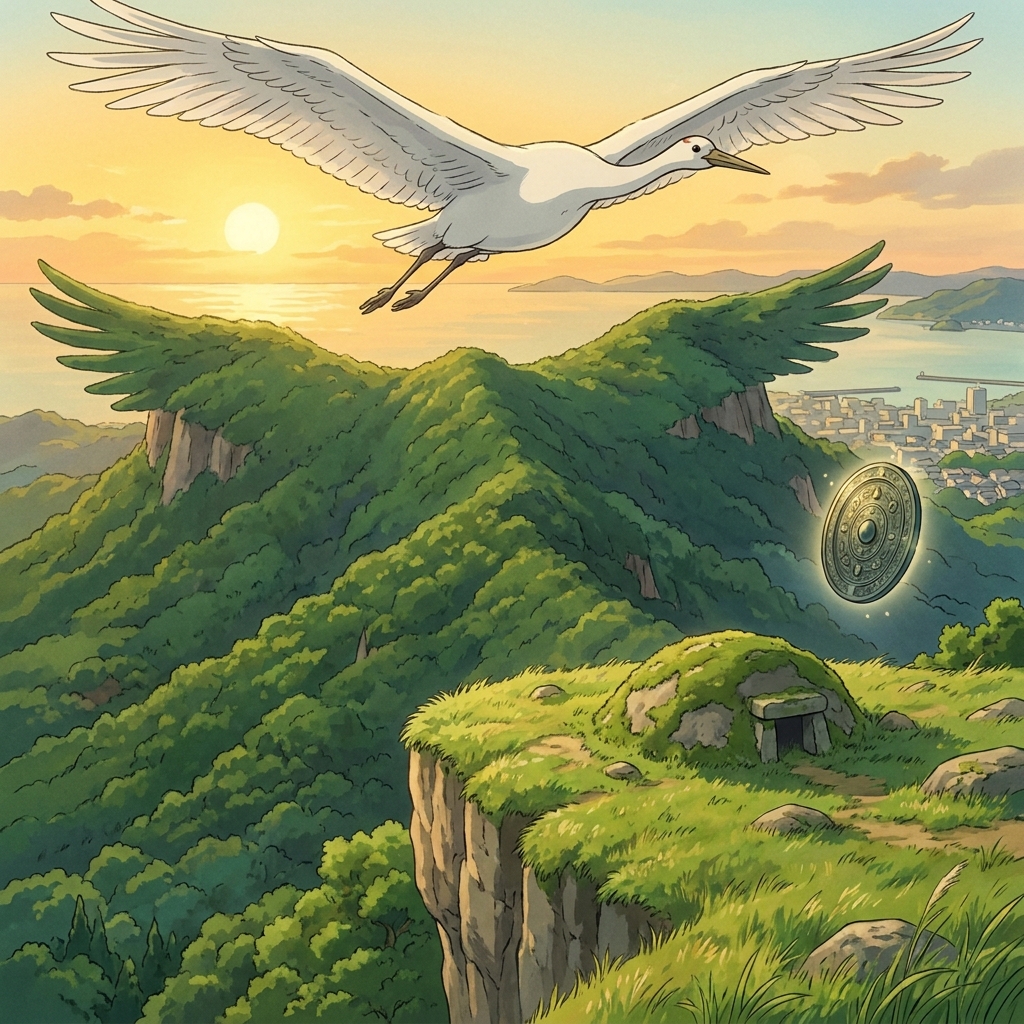
Tsuruo Jinja is located close to the center of Takamatsu City, Kagawa Prefecture, yet a single step inside its grounds envelops you in a tranquil atmosphere. Affectionately known by locals as Doi-no-Miya, this jinja holds beautiful legends that explain the origin of its name, as well as mysteries that will thrill archaeology fans.
Basic Information
Location: 1066 Nishikasuga-cho, Takamatsu City, Kagawa Prefecture
Enshrined kami (Gosaishin): Emperor Ōjin, Uji no Wakiiratsuko, Empress Jingū (Okinaga Tarashihime-no-Mikoto)
Founded: Daido Era (806-809 AD)
—
Legends and Episodes: The Name’s Origin – “A Divine Crane Dancing in the Sky”
The history of Tsuruo Jinja dates back to the early Heian period. According to shrine traditions, it came to be called Tsuruo Hachiman-gu after a wondrous event known as the “auspicious omen of a divine crane” (reikaku no kizui) occurred in 879 AD (Gangyō 3), when a sacred crane was seen descending here.
Another theory suggests that the shape of Mount Mineyama, where the jinja is located, resembles a crane spreading its wings. Thus, the jinja, situated at what would be the ‘tail’ (o) of the crane, became known as Tsuruo (tsuru meaning crane, o meaning tail).
Hidden Historical Story: Deep Connection with Sugawara no Michizane
This jinja also has a deep connection with Sugawara no Michizane, revered as the kami of scholarship. During the Ninna Era (885-888 AD), when Michizane served as the Governor (Sanuki no Kami) of Sanuki Province, he relocated the shrine building from its current site to Doi-no-Hara, about 1.2 km to the southeast. This is why it became known as Doi-no-Miya.
Later, in 1691 (Genroku 4 of the Edo period), the Oku-no-ike agricultural reservoir was constructed, which would submerge the old shrine grounds. Consequently, the jinja was moved back to its present location. The fact that the approach path is connected to the pond’s embankment is a remnant of this history.
Mystery: Kagawa’s Oldest Kofun Perched on a Cliff
Behind the grounds of Tsuruo Jinja lies a mysterious spot that history enthusiasts will adore: Tsuruo Jinja Kofun No. 4, part of the Iwao-yama Kofun Group, a National Historic Site.
Kofun on the Edge of a Cliff: Due to past quarrying in the area, the kofun (ancient burial mound) stands right beside a sheer cliff over 50 meters high. Although it is now fenced off and off-limits, its appearance, “clinging to the cliff edge,” truly conveys a powerful sense of being a guardian kami of the region.
A Mirror That Traveled for Centuries: Excavated from this kofun was a “Four-God Mirror with Animal and Square Patterns” (Jūtai Hōkaku Kiku Shishinkyō) believed to date from the late 3rd century. What’s astonishing is that this mirror has been identified as an “heirloom mirror” (denseikyō), crafted in China hundreds of years before its burial in the kofun. Why such an ancient mirror came into the hands of a powerful local figure and was interred here remains one of the mysteries that stir our imagination about ancient times.
—
Pilgrimage Information: Setting of the Anime “Poco’s Udon World”
The Tsuruo district of Takamatsu City, where Tsuruo Jinja is located, is an important setting for the popular anime “Udon no Kuni no Kin’iro Kemari” (English title: “Poco’s Udon World”), which is set in Kagawa Prefecture.
The area around the Tsuruo district is said to be the model for the protagonist Sota Tawara’s family home, and the anime beautifully depicts townscapes that retain a nostalgic Showa-era charm. While the jinja itself does not appear as a main feature, Tsuruo Jinja, as the local guardian kami (ujigami) of the district, has become a popular spot for many fans as a base for their “pilgrimage to sacred sites” (location hunting), allowing them to immerse themselves in the atmosphere of the work.
—
Points for Your Visit
When you stand in front of the worship hall (Haiden) and look back, a magnificent panoramic view of Takamatsu city spreads out before you. This sense of openness, enjoyed only by those who climb the long stone steps, offers a comforting feeling, as if watching over the city from the “crane’s tail.”
If you wish to receive a red stamp (Goshuin), it is recommended to inquire in advance, as the shrine office (Shamusho) is often closed. Tsuruo Jinja is a place where history, legend, and the world of anime intersect. When you visit Takamatsu, be sure to experience its mystique.
Related Links / References
[1] History and Legend of the Divine Crane Breathing in Takamatsu: Visiting Tsuruo Jinja
[2] History of Takamatsu Castle | Citizens’ Association for the Restoration of Takamatsu Castle
[3] History of Takamatsu Castle Ruins, a Historic Site | Takamatsu City
[4] Tsuruo Jinja – Kagawa Prefectural Shrine Association
[5] Just a moment…
[6] Tsuruo Jinja – Wikipedia
[7] Shrines to Visit in Kagawa Prefecture in January for Goshuin | Onsen♪ Relaxing Time☆
[8] New National Shrine Search
[9] Tsuruo Jinja
[10] Access and Worship Information for Tsuruo Jinja (Sanjo (Takamatsu) Station, Kagawa Prefecture) | Hotokami
[11] Four-God Mirror with Animal and Square Patterns Excavated from Tsuruo Jinja Kofun No. 4 | Takamatsu City
[12] [Sacred Site Pilgrimage] List of Anime Works Set in Kagawa Prefecture! Alphabetical & By Area | Sacred Site Pilgrimage Guild