 By ando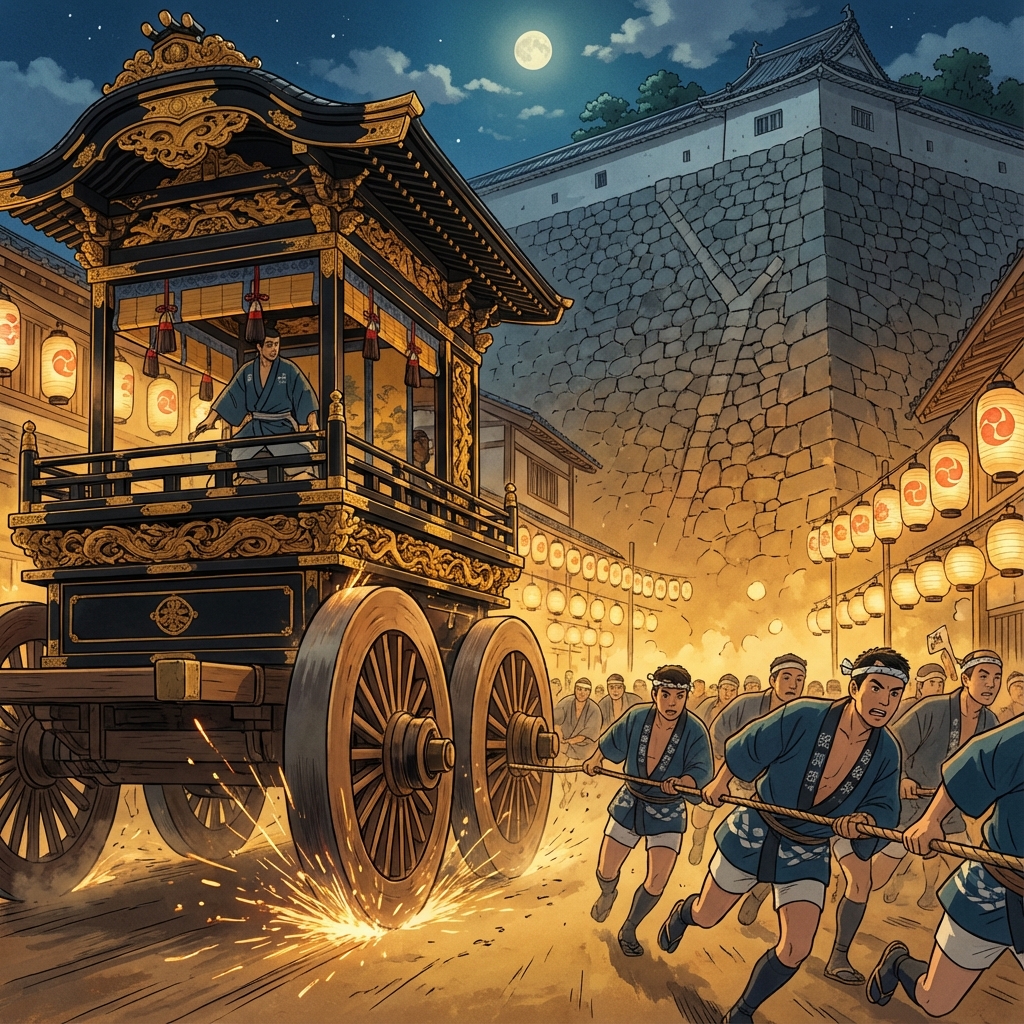
Basic Information:
Location: Oita Prefecture, Nakatsu City, Ninomachi 1273-1 (within Nakatsu Castle Park)
Enshrined Kami: Susanoo-no-Mikoto, Emperor Ojin, Emperor Nintoku, and thirteen other kami.
Origins: In 1883 (Meiji 16), five jinja—Rokushomiya, Ujisha, Inarisha, Ebisu-sha, and Oe Hachiman Jinja—which were located in the Nakatsu castle town, were merged and established on the former site of “Matsu no Goten” in the lower bailey of Nakatsu Castle. It serves as the Sochinju (general guardian shrine) of the former Nakatsu Domain.
Episodes, Legends, and Mysteries
1. Nakatsu Jinja: A Shrine Built on the Site of Tragedy – Memories of “Matsu no Goten”
The current location of Nakatsu Jinja was once home to a magnificent building known as “Matsu no Goten” (Pine Palace). This palace was constructed in 1863 (Bunkyu 3) during the late Edo period, intended as the residence for the daimyo’s wife and children who returned from Edo due to the relaxation of the sankin-kotai system (alternate attendance). However, during the Seinan War in 1877 (Meiji 10), the “Nakatsu Unit,” led by Masuda Sotaro and siding with Saigo’s forces, attacked Nakatsu Castle. In the midst of this assault, the beautiful palace was burned down. Nakatsu Jinja stands today with a history of being established to purify the site, which bears the scars of war, and to pray for the peace and prosperity of the town.
2. Kyushu’s Oldest Stone Wall and the “Y-Shaped Boundary” Mystery
Immediately beside the jinja stands the iconic stone wall of Nakatsu Castle. This wall holds a “mystery” that fascinates history enthusiasts.
If you look closely at the northern face of the main bailey’s stone wall, you can clearly see a distinct boundary where the masonry methods are entirely different. The right side features nozurazumi (a method of stacking natural stones as they are), believed to be the oldest of its kind in Kyushu, built by Kuroda Kanbei, famously known as “Gunshi Kanbei” (Strategist Kanbei). The left side displays uchikomihagi (a method of stacking processed stones), an extension added by Hosokawa Tadaoki, who took control of the domain later.
The path leading to the jinja literally traverses this “boundary between the eras of Kuroda and Hosokawa, two great daimyo strategists,” making it a spot where spiritual power and historical significance intersect.
3. Nakatsu Gion: A 580-Year-Old Festival and its “Running Cultural Assets”
Nakatsu Gion, the annual grand festival of Nakatsu Jinja, is the largest event signaling the arrival of summer in the castle town of Nakatsu. “Nakatsu Gion” refers to the combined festivals of Shimo Gion (Yamihama Jinja) and Kami Gion (Nakatsu Jinja), boasting a history of over 580 years.
The “Gion-guruma” (festival floats) pulled during this event are “running cultural assets,” lavishly decorated with lacquerware and intricate carvings. Particularly impressive are the “yaritori” – the high-speed spinning of the Gion-guruma at intersections – and the vigorous “nerikomi” (procession) performed at night within the jinja grounds. This festival is said to have originated when a Nakatsu Domain lord ordered floats from Kyoto, and the pride of the castle town continues to be inherited to this day.
4. The Legend of a Vengeful Spirit at the Adjacent Kii Jinja
Right next to Nakatsu Jinja stands Kii Jinja. This jinja is associated with a legend that is considered one of Nakatsu Castle’s greatest mysteries: the “Utsunomiya Shigefusa Assassination Incident.”
When Kuroda Kanbei was building Nakatsu Castle, he invited Utsunomiya Shigefusa, a powerful rival local lord, to a banquet and had him treacherously murdered. Subsequently, strange occurrences plagued the Kuroda family, and Kanbei himself is said to have suffered from Utsunomiya Shigefusa’s vengeful spirit. Kii Jinja was established to appease this spirit. When visiting Nakatsu Jinja, exploring Kii Jinja and the adjacent Ogi Jinja, which enshrines Utsunomiya’s retainers, offers a deeper appreciation of the history of light and shadow in the Nakatsu castle town.
Related Links and References
[1] https://ameblo.jp/atsushi-gion/entry-11499948349.html Nakatsu Jinja I | Local History of Nakatsu City, Oita Prefecture
[2] https://www.fukuokanomori.xyz/shoukai/nakatsudaijingu/ Nakatsu Daijingu – Fukuoka no Mori
[3] https://nakatsu-gion.com/kami/ Nakatsu Gion Kami Gion’s Gion-guruma and Omikoshi | Nakatsu Gion Preservation Council
[4] http://nakatsudaijinguu.jp/nakatsujinjya.html Nakatsu Jinja
[5] https://nakatsu-gion.com/rekishi/ What is Nakatsu Gion | Nakatsu Gion Preservation Council
[6] https://www.nippon-matsuri.net/report/nakatsu/ Nakatsu Gion | NPO Japan Festival Network
[7] https://ja.wikipedia.org/wiki/%E4%B8%AD%E6%B4%A5%E5%9F%8E Nakatsu Castle – Wikipedia