 By ando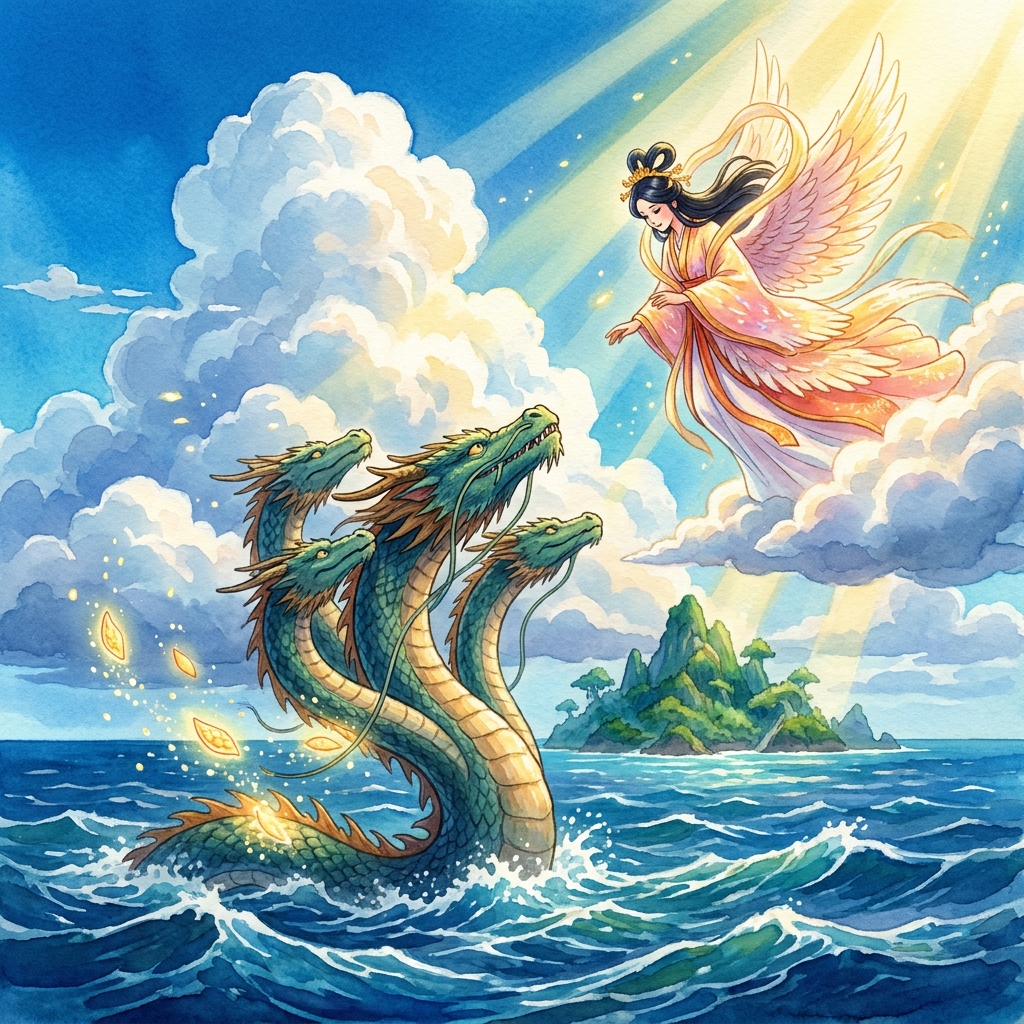
Enoshima Island, renowned as a popular tourist destination in Fujisawa City, Kanagawa Prefecture. Enoshima Jinja shrine, which encompasses the entire island as its sacred precincts, is a prominent power spot, counted among Japan’s Three Great Benzaiten shrines. This time, we will delve deeper into Enoshima Jinja, exploring not just its appeal as a tourist destination, but also the profound legends and mysteries passed down through generations, and its irresistible charm as an anime pilgrimage site for fans.
Basic Information about Enoshima Jinja
Enoshima Jinja comprises the following three shrines (omiya), each enshrining one of the three sister kami known as the “Munakata Sanjojin.”
Hetsunomiya: Tagitsuhime-no-mikoto
Nakatsumiya: Ichikishimahime-no-mikoto
Okutsunomiya: Tagirihime-no-mikoto
These three shrines collectively are referred to as “Enoshima Okami” and have been worshipped since ancient times as kami of the sea, kami of water, and kami who bring happiness and treasure.
Legends and Mysteries: The Dragon kami and the Hojo Clan’s ‘MitsuuRoko’
Enoshima Jinja holds many intriguing legends that captivate history buffs and those interested in the occult.
1. The Love Story of the Heavenly Maiden and the Five-Headed Dragon (Gozuryu)
Once upon a time, a five-headed dragon residing in Fukasawa, Kamakura, who committed many evil deeds, fell in love at first sight with a beautiful heavenly maiden (Benzaiten) who descended with the birth of Enoshima Island. The heavenly maiden admonished the dragon for its misdeeds and urged it to change its ways, with marriage as a condition. The dragon accepted, subsequently becoming a guardian kami who helped people, and is said to have eventually transformed into a mountain (the present-day Ryukokuzan). This legend is recorded in the “Enoshima Engi,” and even today, many people continue to visit Enoshima Jinja and Ryuko Myojinsha across the bay as “Meoto Jinja” (couple shrines).
2. The Untold Story of Hojo Tokimasa and the ‘MitsuuRoko’ (Three Scales)
The origin of the “MitsuuRoko” (three scales) family crest of the Hojo clan, regents of the Kamakura Shogunate, is actually found at Enoshima Jinja. When Hojo Tokimasa secluded himself in Enoshima’s Iwaya cave, praying for the prosperity of his descendants, a beautiful woman (an incarnation of Benzaiten) appeared on the night his prayers were fulfilled. She transformed into a great snake and vanished into the sea, but left behind three scales. Tokimasa is said to have adopted these scales as his family crest. Enoshima Jinja’s crest, “Mukai nami ni MitsuuRoko” (three scales amidst opposing waves), is also inspired by this legend and can be found throughout the island.
3. The Mystery of ‘Iwaya’: Does it Lead to Mt. Fuji?
Enoshima Iwaya, located at the innermost part of the island, is a sacred place believed to be the birthplace of Enoshima Jinja. Legend has it that the depths of this cave are connected all the way to the “ice caves of Mt. Fuji.” Said to have been visited by figures like Kobo Daishi and Minamoto no Yoritomo for spiritual training in ancient times, this place is still enveloped in a unique chill and mysterious atmosphere.
Anime Pilgrimage: Famous Works Set in Enoshima
With its beautiful scenery, Enoshima is also beloved as a setting (sacred site or ‘seichi’) for many anime works.
“Bocchi the Rock!”: In Episode 9, “Enoshima Escar,” the members of Kessoku Band visit Enoshima Jinja. The Otorii (grand torii gate), the escalator, a scene of worship at Hetsunomiya, and even them eating “takosenbei” (octopus crackers) are faithfully depicted, making it an essential pilgrimage route for fans.
“Rascal Does Not Dream of Bunny Girl Senpai”: The Fujisawa-Enoshima area features prominently as the protagonists’ hometown. Everyday scenes like the Enoshima Bentenbashi Bridge and the approach to Enoshima Jinja are beautifully depicted.
“Tsuritama”: This sci-fi fishing story is set on Enoshima. The island’s intricate alleyways and the area around the jinja are vividly portrayed, with the entire work brimming with “Enoshima love.”
“TARI TARI”: A youth choir anime set in Shonan. The precincts of Enoshima Jinja and the area around the observation lighthouse (Sea Candle) appear in important scenes.
Hidden Tips and Interesting Facts for Your Visit
Worship the ‘Naked Benzaiten’: In the Hoanden hall next to Hetsunomiya, a rare bare-bodied Benzaiten known as “Myoon Benzaiten” is enshrined. She is known as the kami of music and performing arts, and it is said that many celebrities discreetly visit her.
Boost Your Fortune with Money Washing: At the “Zeniarai Hakuryu-o” (Money Washing White Dragon King) within the precincts of Hetsunomiya, it is believed that washing money in the pond’s water will improve your financial luck. The key is to cherish and spend the money purified by the golden sacred water.
Enoshima Jinja is where history, legends, and the world of anime intersect. While it’s a delightful place to simply stroll around, visiting with this background knowledge will make the entire island feel even more mysterious and enchanting.
Related Links and References
1. Enoshima Jinja
2. Enoshima Jinja – ROOF-NET ON LINE MAGAZINE
3. Enoshima Jinja – Wikipedia
4. Enoshima Jinja ~Three Sister Goddesses and Different Forms of Benzaiten~ | Report | WEB Fujisawa People
5. Enshrined Deities | About Enoshima Jinja | Official Japan’s Three Great Benzaiten, Enoshima Jinja
6. Fujisawa Public Relations “Municipal Information”
7. Shrines and Temples in Fujisawa Power Spot Japan’s Three Great Benten | Enoshima Jinja
8. Enoshima Jinja Jidai Photography Festival – Enoshima Legend
9. Japan’s Three Great Benzaiten “Enoshima Jinja” on Enoshima Island. What are the kami and blessings of the shrine made up of three shrines? A Journey Through Japan’s Shrines and Kami (Part 16) (2/2) | JBpress autograph | JBpress autograph
10. Enoshima Jinja | Hakken! Japan
11. Ryuko Myojinsha | Spot Information | Enoshima / Kamakura Navi | Official Tourist Information Site for Enoden / Odakyu, introducing recommendations for Enoshima and Kamakura
12. 501 Not Implemented
13. Heavenly Maiden and Gozuryu | Features | Fujisawa City Tourism Official Homepage
14. Fujisawa’s “Kamakura-dono no 13-nin” Related Sites Enoshima | Report | WEB Fujisawa People
15. [With coupon!] What is the charm of Enoshima that attracts people from all times and places? | Features | Enoshima / Kamakura Navi | Official Tourist Information Site for Enoden / Odacq, introducing recommendations for Enoshima and Kamakura
16. Enoshima Jinja “Heavenly Maiden’s Descent! Hojo ‘MitsuuRoko’ Legend and Goshuin” : Gunyu Koki – Travelogue of a Rustic Commoner
17. Enoshima’s MitsuuRoko History!! (Part 1) – Deciphering History
18. Hojo Tokimasa’s Enoshima Dragon kami Legend ~The Three Scales Left by the Dragon kami~