 By ando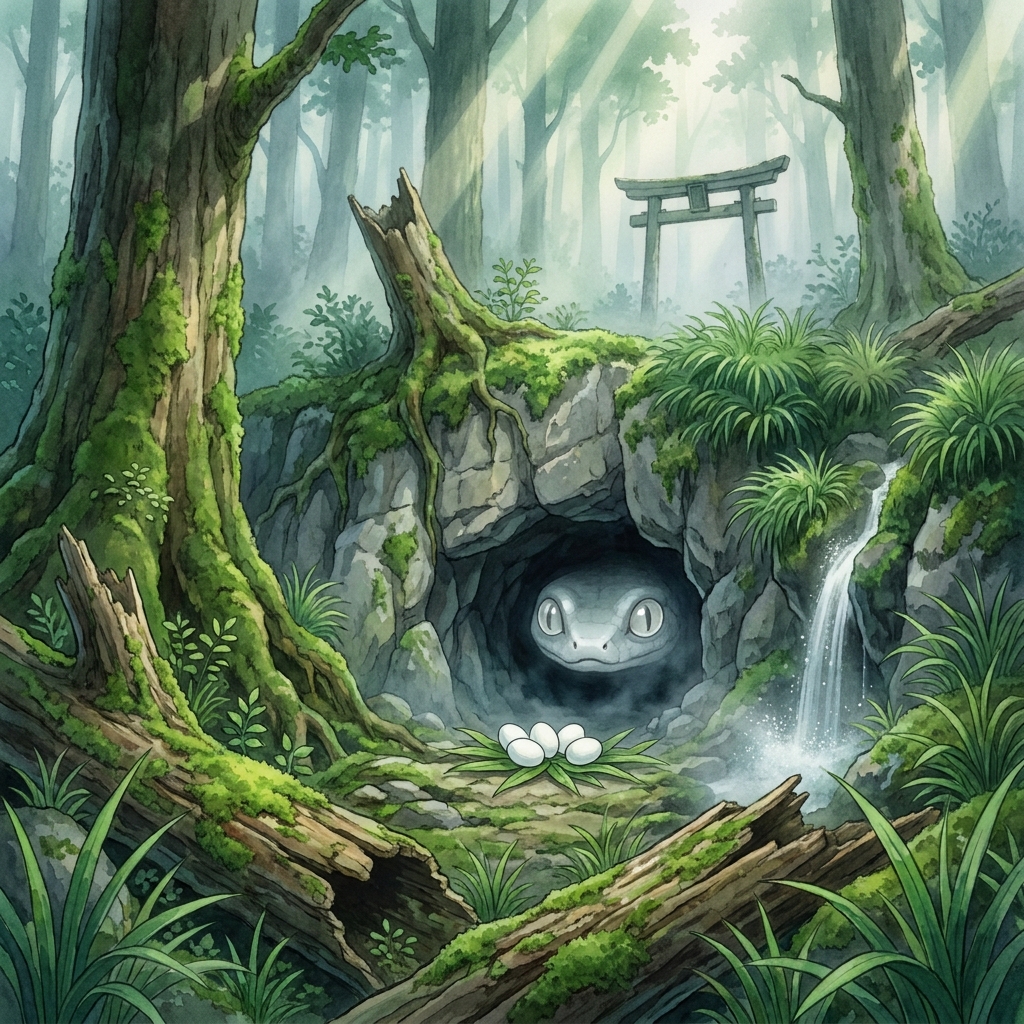
Basic Information
Name: Okitsushima Jinja
Location: 7414 Fukura-yama, Fukura, Konan-machi, Koriyama City, Fukushima Prefecture
Enshrined Kami: Munakata Sanjojin (Three Goddesses of Munakata: Ichikishima-hime no Mikoto, Tagirihime no Mikoto, Tagitsuhime no Mikoto)
History: This ancient jinja is said to have been established in 866 (Jogan 8) during the Heian period, with its kami invited from Munakata Taisha (or possibly Usa Jingu) in Chikushi Province. It is considered one of the ‘Shikinai-sha’ shrines listed in the Engishiki Jinmyocho, and has long been a central hub of faith in this region.
Mystery of the “Goddesses of the Sea” and “Hidden Port” Deep in the Mountains
This jinja’s biggest mystery lies in its name. “Okitsushima” originally means “island of the hidden port,” and the enshrined kami are the Munakata Sanjojin, guardians of the sea. However, this jinja is located far from the ocean, at the eastern base of Mt. Nunobiki, a high-altitude mountain. Why goddesses associated with the “sea” and “port” were enshrined in this deep mountain region remains a mystery to this day. One theory suggests there was a belief that Lake Inawashiro was seen as the sea, or that this location once held special significance as a “hidden sacred site.”
Fuketsu-do: Where the Snake Kami Slumbers and Egg Offerings
A separate shrine building called “Fuketsu-do” (Cave Hall) is located a short climb up the mountain from the left side of the main hall (haiden). A legend remains here that a divine attendant (zuijin) who guided the goddesses from Kyushu hid himself in the form of a snake after completing his duty.
A mysterious cold wind occasionally blows from the rock cave, and it is still devoutly worshipped as “Jagami-sama” (the Snake Kami). In front of Fuketsu-do, it is common to see packs of raw eggs offered as Jagami-sama’s favorite food. Peering into the cave in the mountain’s silence, one is enveloped in a unique sense of tension and a mystical atmosphere, as if the Snake Kami still slumbers there.
Legend of “Osugesama,” the Rain-Calling Deity
Locally, the jinja is affectionately known as “Osugesama.” This name comes from the fact that “suge” (sedges) grew in abundance within the shrine grounds. It is said that since ancient times, when severe droughts occurred, people would cut the sedges from the grounds, offer them at the shrine, and pray for rain, which always brought rain.
Within the shrine grounds, there is also a waterfall called “Sugetaki,” which was once a place for misogi (purification rituals) where worshippers would cleanse themselves. The legends of water, goddesses, and rain prayers tell us that this area has long been protected as a sacred water domain.
The “Kami’s Forest” that Rejects Axes and a Gateway to Another World
The shrine forest (shaso) surrounding the jinja, covering about 15 hectares, is a primeval forest designated as a natural monument of Fukushima Prefecture. Because it has been forbidden to cut trees for hundreds of years, even fallen trees are left to decay naturally, creating a space overflowing with an overwhelming vitality, as if one has stumbled into a world from a Ghibli film.
Passing through the giant stone torii gate on the approach path and climbing the moss-covered stairs gives one the sensation of being cut off from the present world. Especially on foggy days, it emanates a trembling mystique truly befitting the name “gateway to another world.”
Important Note for Visitors: A Sacred Site “Closed” in Winter
The road to Okitsushima Jinja (Prefectural Road 235) is typically closed due to heavy snow from mid-December to mid-April each year. It can be said that its sanctity is preserved by being closed off by snow for about one-third of the year. When planning your visit, it is recommended to wait until the spring thaw.
Related Links/References