
 By ando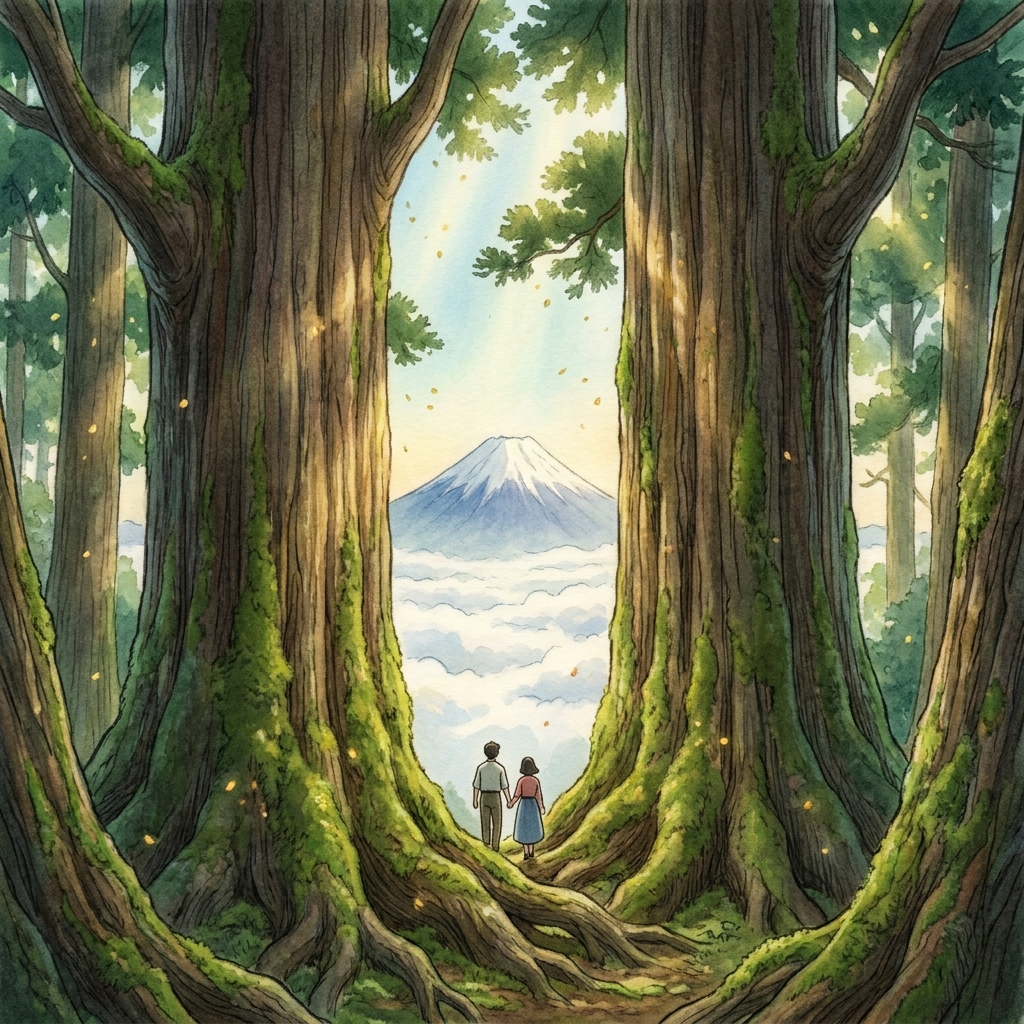
Kawaguchi Asama jinja, located in Fujikawaguchiko-machi, Minamitsuru-gun, Yamanashi Prefecture, is an ancient jinja boasting over 1100 years of history and is one of the component parts of the Mount Fuji World Cultural Heritage site. Known locally as “Asama jinja,” it is revered as a powerful spot with a very strong background, said to have been established to appease Mount Fuji’s eruptions.
Basic Information
Location: Kawaguchi 1, Fujikawaguchiko-machi, Minamitsuru-gun, Yamanashi Prefecture
Enshrined kami: Asama no Okami (Konohanasakuya-hime no Mikoto)
Founded: Jogan 7 (865 CE)
Mount Fuji’s Great Eruption and the “Kami’s Demand”: The Mystery Behind the Jinja’s Origins
The founding of this jinja is deeply connected to an unprecedented disaster that occurred during the Heian period. In Jogan 6 (864 CE), a tremendous eruption known as the “Jogan Great Eruption” occurred at Mount Fuji. The lava flow was so powerful it filled the vast lake “Senoumi,” dividing it into what are now Lake Saiko and Lake Shojiko.
People at the time perceived this eruption as “Mount Fuji’s kami (Asama no Okami) being angered.” Records state that the kami, possessing an official, demanded that a shrine be built to enshrine itself in Kai Province (present-day Yamanashi Prefecture). In response, Kawaguchi Asama jinja was established the following year by imperial decree. In other words, this sacred site was born as “the frontline for directly appeasing Mount Fuji’s wrath.”
The Legend of the “Seven Cedar Trees,” 1200-Year-Old Sacred Boundary Markers
Upon entering the jinja grounds, visitors are first overwhelmed by the massive cluster of cedars known as the “Seven Cedar Trees” (Nanahonsugi). These are said to have been planted when the jinja was founded, and all of them are Natural Monuments designated by Yamanashi Prefecture, boasting over 1200 years of age.
Of particular note are the “Father and Mother” (futahashira), the 5th and 6th cedar trees. These two trees are believed to symbolize Izanagi no Mikoto and Izanami no Mikoto, the two primordial kami, and are worshipped as powerful “matchmaking cedars.” A romantic legend persists that if a man walks around the outside of the trees from the right, and a woman from the left, and then both pass between the cedars together to offer prayers, they will be united.
Modern Marvel: The “Torii in the Sky”
In recent years, an observation point (yohaisho) known as the “Torii in the Sky” (Tenku no Torii) has gained explosive popularity on social media. It is located about a 30-minute uphill walk from the jinja.
This spot was originally established in 2019 as a sacred place to worship Mount Fuji from a distance. The view of Mount Fuji’s entire panorama through the torii gate is truly an entrance to the “realm of the kami.” While an interesting backstory reveals this location was developed on the chief priest’s private land, it is now visited by many worshippers as a precious place to experience the reverence for Mount Fuji.
Please note: A cooperation fee (around 200 yen) may be required for photography, and respectful worship is expected.
Anime Pilgrimage Information: As a Setting for “Encouragement of Climb”
Kawaguchi Asama jinja is also known as a sacred site for the popular climbing-themed anime, “Encouragement of Climb” (Yama no Susume).
In the Season 2 episode featuring the ascent of “Mitsutoge-san,” the main character Aoi and her friends chose the path leading to Kawaguchi Asama jinja as their descent route. The anime faithfully depicts the solemn jinja grounds steeped in history and the avenue of giant cedars, drawing a continuous stream of fans who enjoy anime pilgrimages combined with mountain climbing.
The Cleansing Power Spot: “Mother’s White Waterfall”
Further beyond the jinja, and even higher than the Torii in the Sky, lies “Mother’s White Waterfall” (Haha no Shirataki). This was once a place where people aspiring to climb Mount Fuji performed “misogi” (ritual purification).
Beside the waterfall stands Haha no Shirataki jinja, enshrining Takuhatachiji-hime no Mikoto, the mother kami of Konohanasakuya-hime no Mikoto. It is a hidden power spot known to few, filled with the raw yet pure energy of water, distinct from the tranquility of the main jinja.
Kawaguchi Asama jinja, where the immense power of Mount Fuji intertwines with the prayers of those who sought to appease it. Walking along the approach path surrounded by ancient trees, you will surely feel the spirit of this sacred realm that has endured for 1200 years.
Related Links / References