
 By ando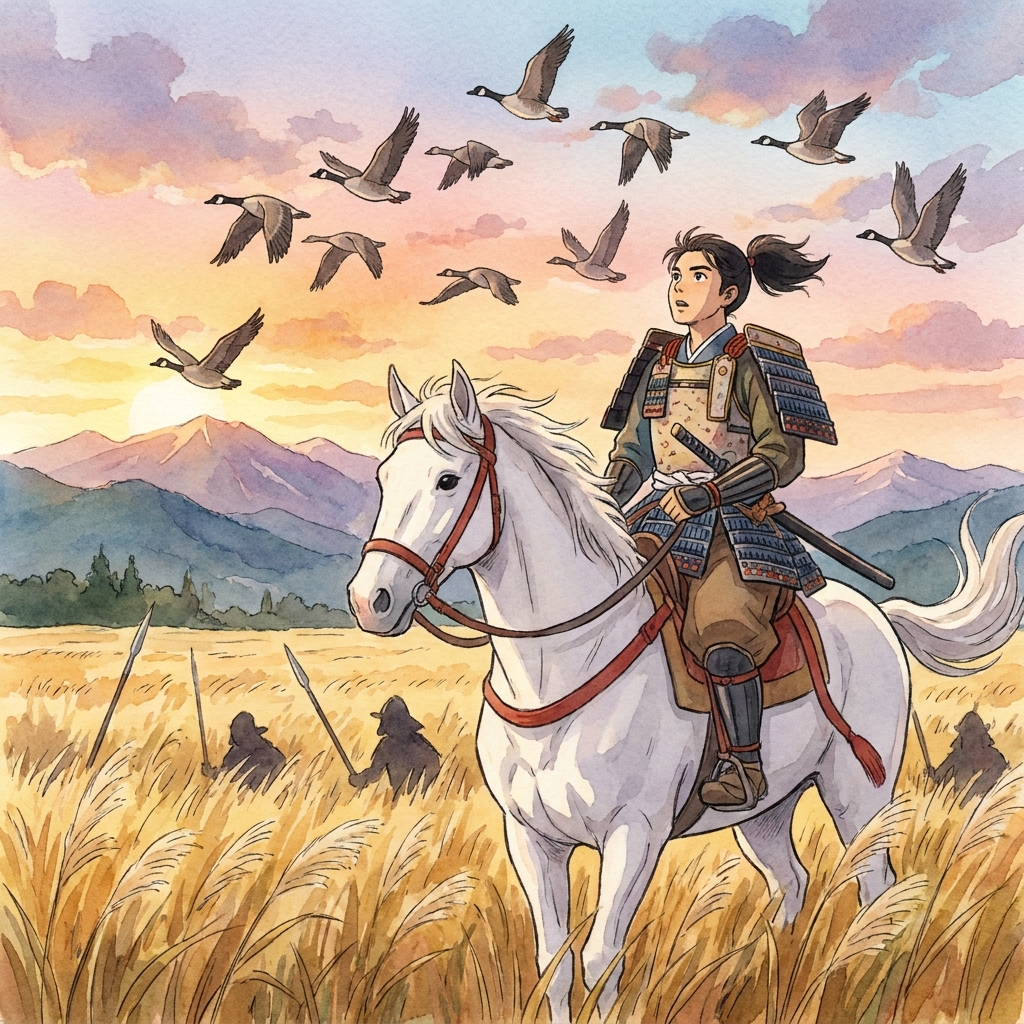
Akita Prefecture, Yokote City, Kanazawa. This was once the location of Kanazawa no Saku, the site of the final decisive battle of the brutal “Gosannen no Eki” (Later Three-Year War) which took place in the late Heian period. Standing on the former grounds of its main citadel and secondary citadel is Kanazawa Hachimangu jinja, which we introduce to you today.
We will delve into the captivating allure of this jinja, filled with legends and mysteries that will intrigue even those who aren’t history enthusiasts.
Basic Information
Location: Akita Prefecture, Yokote City, Kanazawa Nakano Aza Yasumoto-kan 4
Enshrined Kami: Homutawake no Mikoto, Okinagatarashihime no Mikoto, Tamayorihime no Mikoto
Founded: 1093 (Kanji 7)
History: Minamoto no Yoshiie (Hachiman Taro Yoshiie), who quelled the Gosannen no Eki, founded this jinja by inviting (kanjo) the kami from Kyoto’s Iwashimizu Hachimangu jinja, praying for the protection of Dewa Province.
—
Legends and Mysteries: The ‘Disturbed Geese’ that Saved Minamoto no Yoshiie
An essential story when speaking of Kanazawa Hachimangu jinja is the episode of the “Disturbed Geese” (Kari no Midare), which is associated with the warrior god, Minamoto no Yoshiie.
When attacking the forces of Kiyohara Takehira and Iehira, who were holed up in Kanazawa no Saku, Yoshiie looked up at the sky during his advance and witnessed a flock of geese, flying in a neat line, suddenly break their formation. Yoshiie recalled the military strategies he had once studied and intuitively felt, “When the geese break formation, it’s a sign that there are hidden troops below.” Indeed, enemy ambushers were hiding in the grass, and it is said that Yoshiie, by noticing this anomaly, was able to escape a critical situation and turn the tide of battle to his advantage.
This legend was later depicted in historical documents such as the “Gosannen Kassen Ekotoba” (Picture Scroll of the Later Three-Year War) and is still passed down today as a story symbolizing Yoshiie’s strategic brilliance.
The Mystery of Kabuto Sugi (Helmet Cedar) and Hoshikabuto Ishi (Star Helmet Stone)
Within the jinja grounds, there is the site of the “Kabuto Sugi,” where Yoshiie is said to have buried his helmet after the battle and placed a stone on top to pray for peace. Unfortunately, this giant tree, over 900 years old, was lost in a fire in 1983 (Showa 58). However, its roots are still preserved, and beside them sits a stone known as “Hoshikabuto Ishi.”
Additionally, within the grounds is the Kabuto Hachiman jinja, which enshrines Minamoto no Yoshimitsu (Shinra Saburo Yoshimitsu), Yoshiie’s younger brother. This allows visitors to feel the weight of history, where these brothers once campaigned together.
‘Japan’s Best Sacred Horse’ that Escaped the Flames of War
As you proceed along the approach to the jinja, a bronze “Shimme” (sacred horse) with an overwhelming presence appears. Donated in 1936 (Showa 11), this massive statue stands 2.55 meters tall and weighs approximately 500 kilograms.
Notably, during World War II, when many bronze statues were collected under the “Metal Collection Order,” this sacred horse miraculously escaped that fate. The deep faith of the local community may have been what preserved this beautiful horse.
Traditional Mystery Event: Kanazawa Traditional Kakeuta
Held annually on September 14th during the Yoimiya (eve of the festival), the “Kanazawa Dentou Kakeuta” is a very rare Shinto ritual designated as an Akita Prefectural Intangible Folk Cultural Property.
This event involves creating impromptu lyrics to the folk song “Senboku Nigatabushi” and engaging in a call-and-response exchange with another participant, competing for superiority. It was once performed throughout the night and is said to be a remnant of Utagaki, an ancient courtship ritual between men and women. The impromptu singing echoing through the quiet jinja grounds creates a somewhat ethereal and mysterious atmosphere.
—
Anime and Media Pilgrimage Information
Kanazawa no Saku and the Gosannen no Eki, the historical setting for Kanazawa Hachimangu jinja, have been featured in popular works cherished by history fans.
Mutsu Enmei-ryu Gaiden: Shura no Toki:
This popular manga by Kawahara Masatoshi, which has also been adapted into an anime, depicts fierce battles at Kanazawa no Saku in its “Minamoto no Yoshitsune arc” and episodes related to the Gosannen no Eki. Many fans visit this site, which has become a pilgrimage destination, to experience the setting of the intense battles portrayed in the work.
NHK Taiga Drama ‘Homura Tatsu’:
In this drama depicting the rise and fall of the Oshu Fujiwara clan, the Battle of Kanazawa no Saku was also portrayed as a significant turning point in the story.
Kanazawa Hachimangu jinja is not merely a power spot; it is a place where the “memories” of Heian-period warriors who fought with their lives are etched into the land. Why not embark on a journey to feel the mystery of history, contemplating the legend of the disturbed geese?
Related Links and References
1. Yokote City Kanazawa | Akita’s Resilient Village Support Site: Akita Genki Mura
2. Kanazawa Hachimangu Festival | Akita’s Resilient Village Support Site: Akita Genki Mura
3. Kanazawa, the Stage of the Gosannen Battle | Akita’s Resilient Village Support Site: Akita Genki Mura
4. (Akita) Kanazawa Hachimangu Traditional Kakeuta | Yokote City Official Website
5. Yuyu Rakkan Zakkicho: Akita Prefecture Yokote City Kanazawa, Kanazawa Hachimangu
6. Kanazawa Hachimangu | Akita Prefecture Shrine Association
7. [Ishikawa] 7 Anime Sacred Sites! A pilgrimage centered in Kanazawa City, a prefecture with famous stations | DEEPLOG
8. Gosannen Battle – Masumi Log
9. Kanazawa Hachimangu | Nippon Travel Magazine
10. Kanazawa Hachimangu
11. Kanazawa Hachimangu (Yokote City, Akita Prefecture) – I want to travel Akita
12. Kanazawa Hachimangu – Wikipedia
13. Kanazawa Sightseeing [Anime Pilgrimage Summary] Visit the anime locations set in Ishikawa/Kanazawa! | Kanazawa Biyori
14. Minamoto no Yoshiie Japanese History Dictionary / Home Mate